


Mowing is the single biggest factor in how green your UK lawn looks from March to October. Get it right, and you’ll have neighbours asking what your secret is. Get it wrong, and no amount of feed or water will rescue that tired, patchy look. This guide breaks down exactly how to mow for a thicker, greener lawn—season by season, cut by cut.
Start Here: How Often Should You Mow for a Truly Green Lawn?
For most UK lawns, the sweet spot is mowing little and often. That typically means every 7 days in spring and early autumn, and every 5–7 days during peak summer growth from late May through July, weather permitting.
Why does frequency matter so much? Frequent light cuts keep grass dense, helping it out-compete lawn weeds and reduce moss. When you mow regularly, you’re only removing a small amount of leaf each time, which keeps the plant healthy and encourages strong grass growth. Compare that to occasional “haircuts” that scalp the lawn and stress the grass—those lead to bare patches, yellowing, and an open invitation for weed growth to take over.
If you’re busy and can’t commit to a perfect schedule, don’t worry. Even moving from fortnightly to weekly mowing can dramatically improve colour and thickness within a single growing season. The lawn responds remarkably quickly when you stop removing too much at once.
This is where GREENER fits in. We handle the nutrition and problem-solving through our Transformation programme and Seasonal Care with GROWTH, POWER, and BOOST, so that every mow you make delivers better results. When the grass is properly fed and protected, your regular maintenance pays off in visible green.
Ready to stop guessing and start seeing real progress? Visit grassisalwaysgreener.co.uk to start your full lawn transformation.
What We Do Differently at GREENER
GREENER is a premium UK lawn care specialist focused on predictable, long-term results rather than quick fixes that fade after a few weeks.
We take the guesswork out of mowing by giving you a simple, written cutting plan tailored to your grass type, garden shade, and soil conditions. Whether you’re dealing with heavy clay in Manchester or sandy soils on the south coast, your advice reflects your actual lawn—not generic rules copied from a gardening book.
Our Transformation phase repairs underlying issues like thatch, compaction, and nutrient deficiency. This means that when you mow, the lawn responds with strong, green regrowth rather than more bare patches. You’re not fighting against hidden problems with every cut.
The Seasonal Care programme—structured around GROWTH, POWER, and BOOST—is designed around real UK seasons. Your mowing advice is always matched to what the lawn is experiencing outside your window, not some theoretical average.
Every GREENER visit includes practical mowing guidance on blade height, frequency, and pattern specific to your garden. Our lawn experts walk you through exactly what to do between visits, so you feel confident rather than confused.
You can request a free lawn analysis and personalised mowing plan via our website. It’s the first step towards making every cut count: grassisalwaysgreener.co.uk.
Green Mowing Basics: The Three Golden Rules
Follow these three simple rules, and you’ll see a visibly greener lawn within a single growing season. They work for every UK garden, from tiny courtyards to large family lawns.
1. Never remove more than one-third of the grass blade
This is the golden rule of lawn mowing. If your grass is 6cm tall, don’t cut below 4cm. Removing more than a third in one go is called scalping, and it causes yellowing, stress, and weak roots. Studies show that cutting more than one-third removes up to 70% more root mass, leaving the lawn vulnerable to drought, disease, and weed invasion.
2. Keep the mower blade sharp
A sharp blade makes a clean cut that keeps the lawn green and healthy. Dull blades tear rather than slice, creating ragged edges that turn grey-brown and invite disease—research suggests a 50% higher risk of fungal problems from blunt cuts. Sharpen or replace your mower blades at least once a year, ideally in late winter (January–February) before the mowing season begins.
3. Mow when it’s dry on top
Avoid cutting when the grass leaf is wet. Dry-leaf mowing gives a cleaner cut, reduces clumping, prevents rutting on soft soil, and limits disease spread. If you’ve had morning dew or a shower, wait until the surface has dried before you mow.
GREENER’s advice always starts from these three rules, then adjusts for your lawn’s specific needs. Get these right, and you’re already ahead of most homeowners.
Ideal Mowing Heights for a Greener UK Lawn
Cutting height is the quickest lever you can pull for greener colour and stress resistance in UK climates. Here’s what works for most lawns:
|
Season/Condition |
Recommended Height |
|---|---|
|
Spring and early autumn (typical) |
4–5cm |
|
Summer dry spells |
5–6cm |
|
Cool, moist weather (healthy lawn only) |
3.5–4cm |
|
Shady areas or high-traffic play lawns |
5–6cm (higher end) |
Shady lawns and areas where children play generally need to be kept on the higher side. This deeper green comes from more leaf surface capturing light, and the extra height protects roots from wear and tear.
When adjusting your mower deck, do it gradually over two or three cuts rather than jumping from very short to very high (or vice versa) in a single mow. Sudden changes shock the grass and can cause temporary yellowing.
When nutrition through GROWTH and weed/moss control through POWER are optimised, you can safely mow a touch lower for a more manicured look without losing colour. That’s the benefit of having the whole system working together.
Seasonal Mowing in the UK: When to Mow—and When to Rest the Lawn
UK lawns have a defined mowing year, typically from March through November. The calendar is less important than temperature and rainfall—green lawn mowing means adjusting through the seasons, not using one schedule all year round.
Since around 2018, UK weather has become more unpredictable: wet springs followed by periodic summer droughts, mild winters with sudden cold snaps. Your mowing needs to flex with these patterns.
GREENER’s Seasonal Care plan changes inputs—feeds, treatments—ahead of each seasonal shift, so your mowing can stay simple and effective.
Spring Mowing (March–May)
Mowing usually restarts in March or early April once soil temperatures reach around 7–8°C and grass starts growing again. You’ll notice the lawn “waking up” with fresh green tips appearing.
For the first two or three mows, start with a higher cut around 5cm. This helps the lawn recover gently after winter, when roots are rebuilding and leaves are delicate. Gradually lower the height if the lawn looks healthy and dense.
In early spring, mow every 7–10 days. As growth speeds up through late April and May—UK lawns can grow 10–15mm per week at peak—move to weekly cuts.
Spring is when GREENER’s GROWTH treatments support fresh green leaf production. Mows in April and May have a big impact on density and colour, so this is the time to be consistent.
Avoid mowing during or immediately after heavy April showers. Wet soil leads to smearing, compaction, and muddy footprints that damage the lawn surface.
Summer Mowing (June–August)
June and early July bring fast growth across most of the UK. Weekly or even twice-weekly mowing at 4–5cm can produce a very fine, green finish during this period.
In hot, dry weather—often late July and August—raise the cut to 5–6cm. Taller grass shades the soil, conserves moisture, and keeps the lawn greener. Research shows lawns cut high during drought need up to 50% less water to maintain colour.
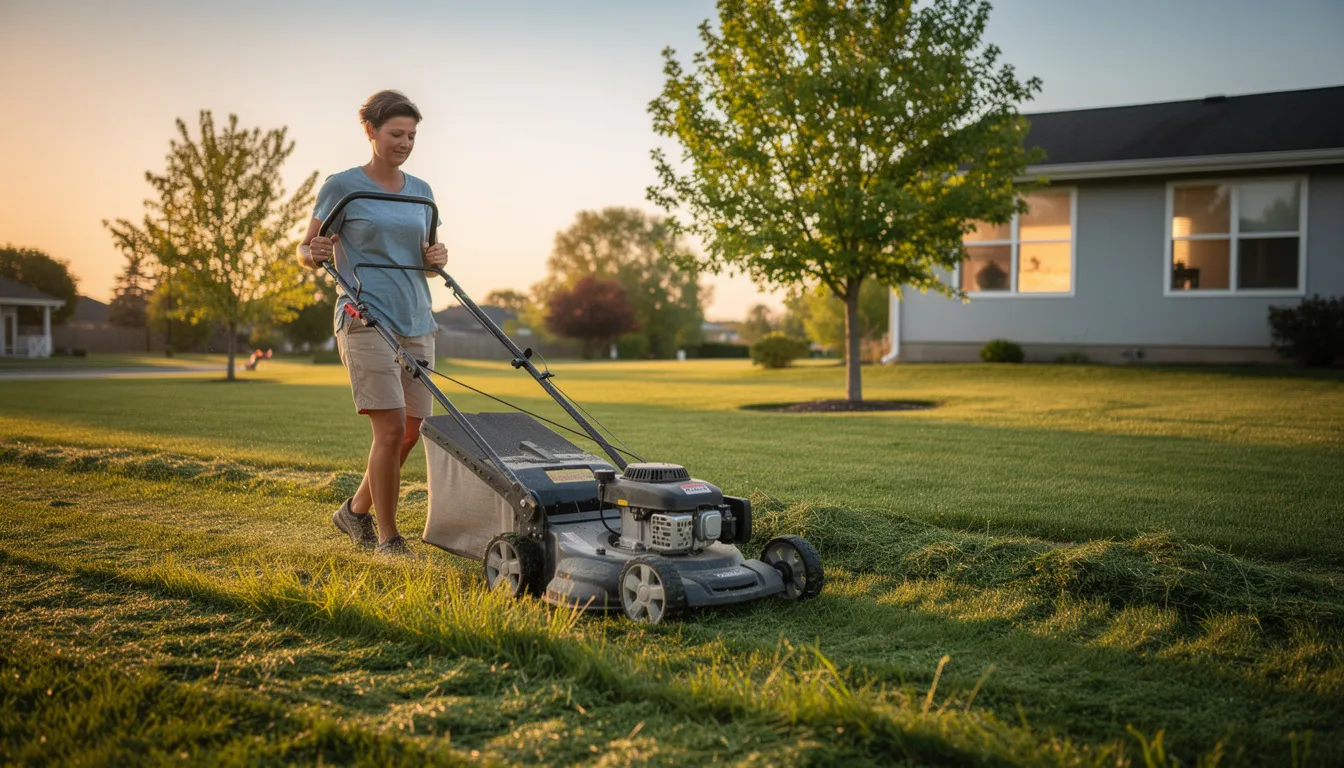
Avoid mowing in the heat of the day during heatwaves. Early morning or early evening cuts reduce stress on the grass and on you.
If your lawn turns brown or straw-coloured during an extended dry spell, pause mowing or mow very lightly and high until rain returns. The grass isn’t dead—it’s dormant. It will recover.
GREENER’s POWER and BOOST applications in summer protect colour and resilience, so that mowing remains effective even in tougher conditions. We time these treatments to support the lawn when it needs help most.
Autumn Mowing (September–November)
Early autumn is a prime time for lawn recovery and thickening. Soil is still warm, moisture returns, and grass responds with vigorous growth. Continuing regular mowing keeps new growth dense and green.
Maintain a 4–5cm height in September and October, mowing every 7–10 days as growth gradually slows. As nights cool and growth drops off in late October and November, raise the cut slightly and extend the interval between mows.
GREENER’s autumn GROWTH and BOOST feed strategy prepares the lawn for winter. Each autumn mow helps the lawn knit together and stay greener longer into the year—meaning less work come spring.
Before each mow, clear fallen leaves. Leaves left on the lawn smother grass, create yellow patches, and encourage moss-prone areas. A quick rake before cutting saves problems later.
Winter Mowing (December–February)
In most UK winters, mowing should be minimal or paused completely. When growth stops, soil is waterlogged, or frost arrives, the mower stays in the shed.
Occasional light mowing on a dry, mild winter day—during a December or February warm spell—can tidy the lawn. Set blades high at around 5–6cm and take very little off.
Never mow frozen or frosty grass. The ice crystals crush leaf cells, leaving grey or brown tracks that linger into spring. Even light foot traffic on frozen lawns causes damage.
GREENER uses this winter pause to focus on planning, soil health checks, and programme timing. When mowing season starts again, your lawn is ready to respond strongly.
Don’t feel guilty about a slightly longer winter lawn. Patience now means a greener spring—and healthier roots ready for the year ahead.
Mowing Patterns and Edges: Little Tweaks, Big Visual Difference
The way you move the mower—and how you finish the edges—can transform a standard back garden into an outdoor space that looks professionally maintained.
Alternate your mowing direction each time you cut. Go north–south one week, east–west the next, then diagonal. This prevents ruts, reduces compaction, and encourages upright grass growth. Studies show alternating directions can reduce weed growth by up to 35% through better shading and airflow.
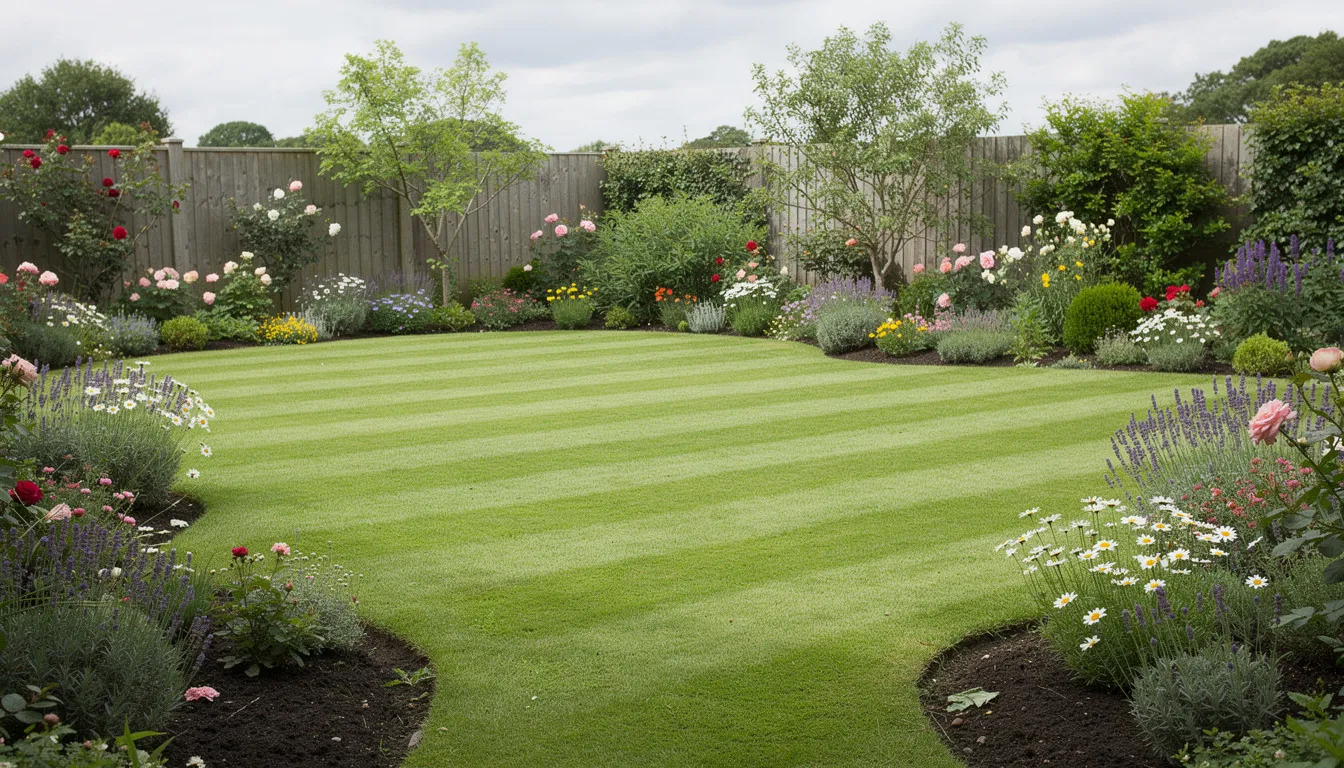
Simple stripes are easier than they look. Stripes are created by bending the grass with a roller or rear flap on the mower. Cylinder mowers create the sharpest lines, but modern rotary mowers with rear rollers also deliver great results. The contrast between light and dark bands enhances the green appearance dramatically.
Edge along paths, patios, and borders using a half-moon edger or long-handled shears. Neat edges instantly make the lawn look greener and more intentional—it’s one of the simplest ways to elevate your garden.
For typical UK homeowners, edging every 2–3 mows during peak season is realistic and effective. You don’t need to do it every week.
GREENER teams can reset wobbly or overgrown edges during Transformation visits. After that, regular mowing and light touch-ups are easy to maintain yourself.
Clippings, Mulching and Collection: What’s Best for a Greener Lawn?
Both leaving clippings and collecting them can be “green” choices—it depends on conditions.
Leave clippings on the lawn during peak growth (late spring to early summer) when you’re mowing frequently. Short clippings act as a free, mild fertiliser, returning up to 25% of the lawn’s nitrogen needs and helping colour. This practice, called grasscycling, can save around £20–30 per year on fertiliser for an average lawn.
Collect clippings when:
-
The grass is long or wet
-
You’re dealing with lawn weeds gone to seed
-
Moss is present
-
Clippings would clump and smother the grass
If you have a mulching mower, you can safely mulch when grass is dry and growth is steady. Switch to collection during heavy leaf-fall in autumn or when disease is an issue.
GREENER’s feeding schedule takes clippings into account. If you’re regularly grasscycling, we adjust the nutrients in your treatments accordingly—protecting both your lawn and the environment from over-feeding.
Collected clippings don’t have to go to waste. Compost them mixed with brown material like shredded cardboard, and you’ll create a useful resource for your flower beds and borders.
Water, Weather and Mowing: Keeping the Lawn Green Through Extremes
Recent UK weather patterns—hot, dry spells in late summer, heavier winter rains—directly affect mowing decisions. Understanding how to adapt keeps your lawn looking its best.
During drought: Higher cutting heights and less frequent mowing help lawns stay greener and recover faster once rain returns. Taller grass shades roots and reduces water loss through evaporation by up to 70% compared to scalped lawns.
After prolonged rain: Avoid mowing when soil is saturated. Wheel ruts, compaction, and muddy patches are hard to fix and create bare patches where weeds and moss move in.
Try the footprint test: walk across your lawn. If your footprints remain visible, the grass is either too wet or too stressed to mow. Wait for drier conditions.
GREENER programmes build deep roots and stronger turf so your lawn can handle weather swings. When the grass has a strong root system and good nutrition, you can follow sensible mowing rules without panic.
For water-wise practices during extended dry weather, water deeply but infrequently—and always in the early morning. This supports healthy grass growth without overusing mains water, and means your mowing still delivers good results even in tough summers.
Common Mowing Mistakes That Stop Your Lawn Looking Green
Many UK lawns suffer from yellow patches, brown stripes, and poor regrowth because of avoidable errors. Here’s a quick checklist:
|
Mistake |
What It Does to Your Lawn |
|---|---|
|
Cutting too short (scalping) |
Exposes soil, encourages weeds and moss, causes yellowing |
|
Mowing with a blunt blade |
Shreds grass, creates greyish cast, increases disease risk by 50% |
|
Same mowing track every week |
Creates ruts, compacts soil, reduces healthy growth |
|
Cutting very long grass in one go |
Shocks the plant, removes too much root mass, causes stress |
|
Mowing in frost |
Crushes leaf cells, leaves brown or grey tracks for weeks |
|
Mowing in baking heat |
Stresses grass, accelerates moisture loss |
|
Mowing waterlogged ground |
Causes wheel ruts, compaction, muddy damage |
If you recognise several of these habits, don’t be discouraged. Changing just one or two can produce visible improvements within a month of the growing season.
GREENER’s first visit always includes an honest review of your current mowing practices. We’ll advise on easy, personalised changes you can adopt immediately—no judgement, just practical tips that work.
How GREENER’s System Turns Every Mow into Progress
Mowing works best when the lawn is properly fed, aerated, and protected from weeds and moss. That’s precisely what the GREENER system is built around.
Transformation is our intensive renovation and correction phase. We deal with compaction, thatch, moss, and nutrient imbalance so that the grass plant can respond positively to every mow. This might include scarification, aeration, overseeding bare patches with quality grass seed, and targeted moss killer treatments where needed.
Seasonal Care is our year round maintenance programme:
-
GROWTH delivers tailored lawn feed at the right time, supporting strong leaf production and that rich lawn green colour
-
POWER handles weed and moss control, so your mowing isn’t fighting against invaders
-
BOOST targets recovery and colour during challenging periods, helping keep your lawn healthy through summer stress and autumn preparation
This joined-up approach means you don’t need to become a lawn scientist. You just follow a simple treatment plan and mowing guide while we handle the complex seasonal care.
Real example: A typical 100m² family lawn in Leeds started May with patchy grass, moss damage, and persistent yellow areas. After Transformation work and two months of Seasonal Care combined with adjusted mowing height, the lawn was uniformly green and healthy by July. The homeowner’s only job? Mowing weekly at 5cm and following our straightforward advice.
Our customers consistently tell us the difference is night and day—a beautiful lawn that stays that way, not just for a few weeks, but through the seasons.
Your Next Step: Request Your Free Lawn Analysis
Green lawn mowing isn’t about perfection—it’s about making small, consistent choices that add up to a thicker, greener, more resilient lawn. Combine those mowing habits with proper nutrition and expert care, and you’ll achieve something that feels almost effortless: a lawn that looks great all year, from early spring through early autumn and beyond.
GREENER takes the complexity out of lawn care. We’re highly recommended by homeowners across the UK who wanted to stop guessing and start seeing real results. Whether you’re battling moss, trying to fill bare patches, dealing with compacted clay soil, or simply want to maintain what you’ve already got, we have a range of services designed to help.
Your local lawn expert is ready to assess your lawn, identify what’s holding it back, and create a personalised plan that makes every future mow count.
Don’t forget: a healthy lawn isn’t just about aesthetics. It’s about creating an outdoor space you actually want to use—a place for family life, for relaxing, for enjoying your garden without worrying about patches, weeds, or that persistent moss problem.
Visit grassisalwaysgreener.co.uk today to request your free lawn analysis. Let’s turn your lawn into the lush, green space you’ve always wanted—and make sure it stays that way.


