


If your lawn looks more tired than triumphant, you’re not alone. Patchy areas, stubborn moss, and that washed-out colour plague most lawns across the UK at some point. The good news? Greening grass isn’t a mystery reserved for groundskeepers at Wimbledon. With the right approach—and a system that removes the guesswork—you can achieve a thicker, darker, healthier lawn that you’ll actually want to show off.
This guide walks you through everything you need to know about making your grass greener, from the science behind that lush green colour to practical, season-by-season advice tailored specifically to UK conditions.
Quick wins: how to make your grass greener fast
Here’s the reassuring truth: you can usually see a visible green-up within 7–10 days if you take the right steps. The fastest safe route to greener grass in the UK combines three fundamentals: correct mowing, smart watering (only when the lawn actually needs it), and a balanced nitrogen-rich fertiliser applied at the right rate.
GREENER’s Transformation Plan is designed to accelerate this process by combining targeted scarification, overseeding thin areas, and professional-grade lawn feed in one coordinated approach. Rather than buying five different products and hoping for the best, you get a system that quickly shifts a tired lawn towards deep green.
This week’s actions for faster greening:
-
Adjust your mower to a higher setting (aim for 35–50mm)
-
Clear debris, fallen leaves, and any obvious thatch buildup
-
Apply your first GROWTH feed following label rates exactly
-
Check your watering pattern—deep and occasional beats shallow and daily
-
Note problem areas (bare patches, heavy moss, compaction) for targeted treatment
The key is acknowledging common frustrations—patchiness, dull colour, moss taking over—and understanding that GREENER exists precisely to remove the trial-and-error that wastes your time and money.
What actually makes grass green? (The science in plain English)
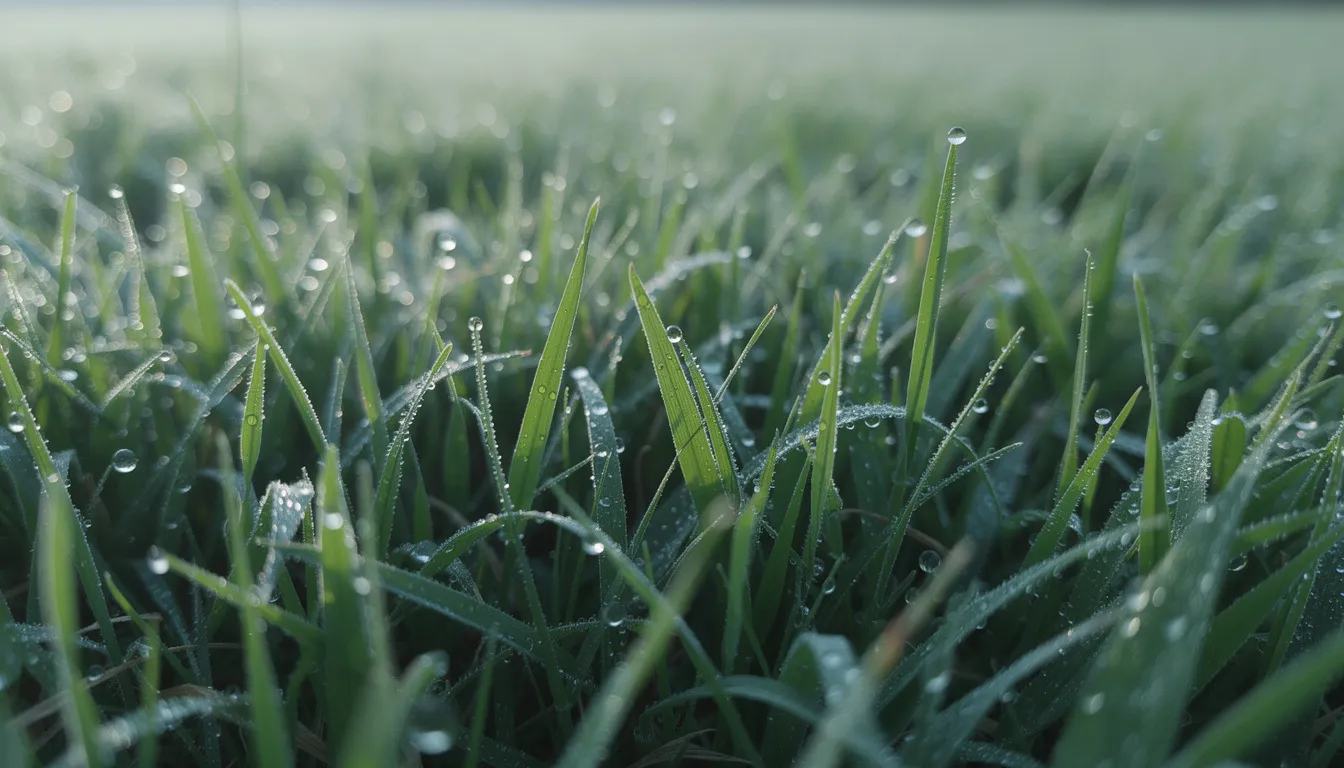
Chlorophyll is the green pigment in grass that does all the heavy lifting. It captures sunlight and combines it with water and nutrients from the soil to create energy for growth. More chlorophyll means darker, healthier-looking turf. Less chlorophyll means that pale, yellowish lawn that makes you wince every time you look out the window.
Three nutrients play starring roles in colour:
-
Nitrogen drives leaf growth and is directly responsible for that rich, dark green grass colour. It’s the main ingredient in most lawn fertilisers for good reason.
-
Magnesium forms part of the chlorophyll molecule itself. Without sufficient magnesium, grass simply cannot produce the pigment it needs.
-
Iron enhances colour depth without pushing excessive soft growth. It’s particularly useful on chalky, high-pH soils common across southern England.
UK lawns often go pale because of nutrient-poor soil, compaction from foot traffic, shallow roots that can’t access deeper moisture, and lack of organic matter to feed beneficial soil organisms. Clay-heavy ground—widespread in the Midlands and South East—can reduce oxygen availability to roots by up to 50%, directly limiting how green your turf can become.
One crucial point: over-feeding with nitrogen causes soft, disease-prone growth that looks impressive for a fortnight then collapses. The goal is steady, balanced feeding throughout the growing season, not dumping a bag of fertiliser and hoping for miracles.
Seasonal greening plan for UK lawns
A truly green lawn is the result of year-round habits, not one-off fixes. UK weather patterns—wet winters, variable summers, occasional drought, and everything in between—shape exactly what you should do and when you should do it.
The GREENER system is structured around two phases: Transformation (a one-off renovation for lawns that need serious work) and Seasonal Care with three key elements:
-
GROWTH – feeding for colour and density
-
POWER – weed and moss control
-
BOOST – targeted improvements for specific problems
This section walks month-by-month through the calendar at a high level, with more detail on mowing, feeding, and watering in dedicated sections below. Everything here is specifically tailored to typical UK conditions in England, Scotland, and Wales—not generic advice written for climates nothing like ours.
Spring (March–May): reset and kick-start greenness
Spring is the most important window for making a lawn thicker and greener before summer arrives. Growth resumes when soil temperatures climb above 5°C and day lengths exceed 12 hours, triggering the grass to wake from winter dormancy.
Core spring jobs:
-
First cut of the year at a higher setting (40–50mm) to avoid shocking the grass
-
Rake out dead material and debris that has accumulated over winter
-
Light scarification if thatch or moss is present—removing that spongy layer lets air, water, and nutrients reach the roots
-
Overseed thin areas at 30–50g per square metre to thicken density before weeds move in
A balanced, slow-release fertiliser in late March or April fuels new green growth without the risk of scorching. Look for products with 20–30% slow-release nitrogen that feeds steadily over 8–12 weeks rather than all at once.
If moss is a problem—and it affects around 60% of lawns in wetter regions like Scotland—an iron-rich product darkens the grass and weakens moss in cool, damp conditions. GREENER’s Transformation service is often carried out in this period, combining scarification, aeration, overseeding, and the first GROWTH feed in one coordinated visit.
Summer (June–August): keep it green through heat and holidays
Summer requires a balance between keeping the lawn green and not fighting nature during inevitable dry spells. The UK’s increasingly variable summers—2022’s heatwaves scorched roughly 25% of domestic lawns—mean flexibility is essential.
Key summer practices:
-
Raise the mower height to 50–75mm in hot weather. Taller grass shades the soil, reduces evaporation, and keeps roots cooler.
-
Water deeply and infrequently—10–15mm (about 10 litres per square metre) once a week beats daily light sprinkles that create shallow, drought-vulnerable roots.
-
Water early morning or late evening to minimise evaporation and reduce fungal disease risk.
In much of the UK, a lawn can safely “go straw-coloured” during a dry weather spell and recover fully when rain returns. This dormancy is a natural survival mechanism, not a sign of permanent damage.
A mid-summer light feed works well if the lawn is actively growing, but avoid applying high-nitrogen products to dry, stressed turf in hot conditions—you’ll cause scorch rather than greening. GREENER’s POWER treatments can target summer lawn weeds such as dandelions and clover without harming the surrounding grass, keeping your lawn looking clean while it deals with the heat.
Autumn (September–November): rebuild roots and colour
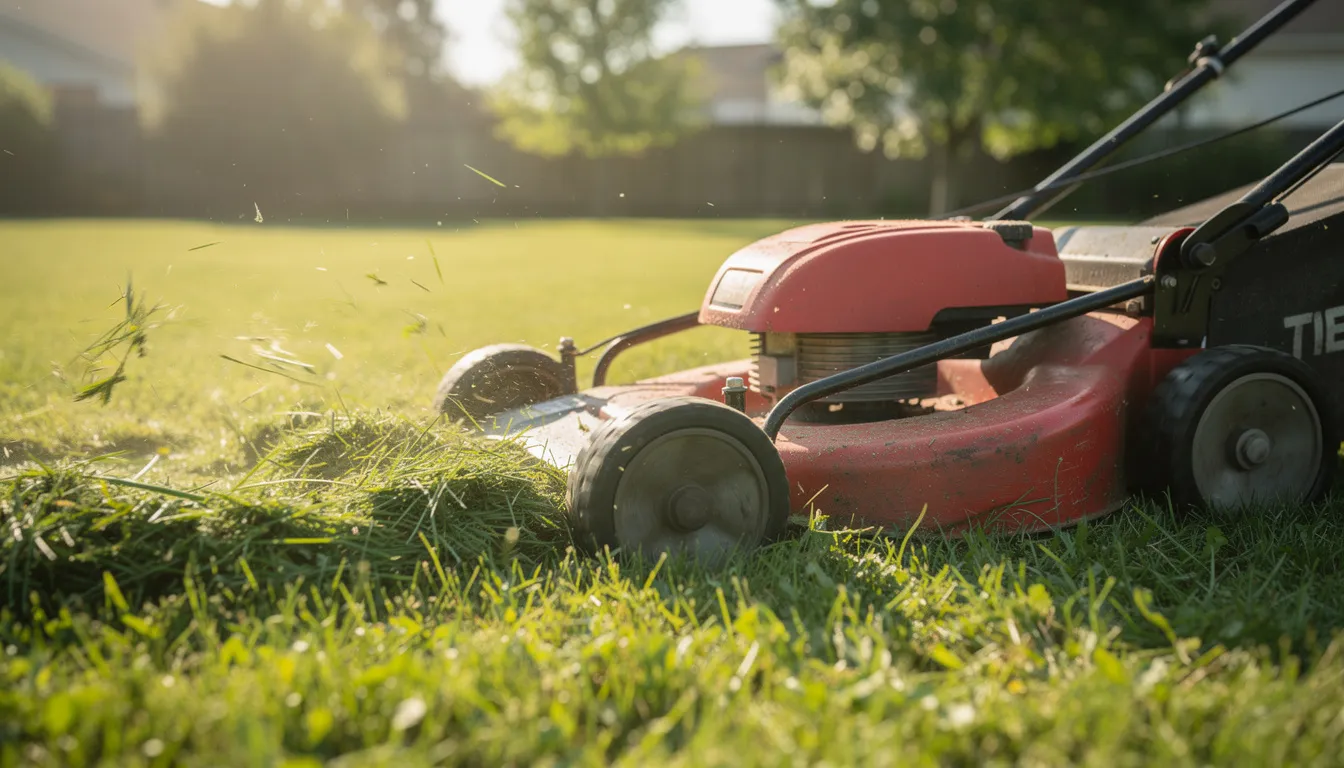
Autumn is the second-best time (after spring) to transform a tired, pale lawn into a thicker, greener surface for the following year. Soil temperatures remain warm enough for root growth while air temperatures cool, creating ideal conditions for renovation work.
Autumn priorities:
-
Hollow-tine aeration or spiking relieves compaction from summer use. Trials show this can increase water infiltration by 200–300% and visibly improve greening within weeks.
-
Overseed into aeration holes or after light scarification to thicken the sward and out-compete moss and weed growth.
-
Switch from high-nitrogen summer feeds to an autumn fertiliser with more potassium, hardening the turf and supporting winter colour.
GREENER’s BOOST treatments in autumn focus specifically on root strength and disease resistance. The result? Your lawn stays greener through cold, wet weather rather than fading to yellow at the first frost.
Winter (December–February): protect what you’ve built
Growth slows dramatically in winter, so the focus shifts to protecting existing green rather than forcing new leaf growth. Grass doesn’t stop photosynthesising entirely—it just does so very slowly.
Winter maintenance:
-
Mow only on milder days when the ground isn’t waterlogged, frosty, or frozen. Cutting frozen grass damages the leaf blade and invites disease.
-
A low-nitrogen, iron-rich winter tonic in milder spells deepens colour and hardens the turf, particularly effective on lawns prone to moss.
-
Stay off waterlogged or frosty lawns to prevent compaction and muddy patches that show as yellow bare spots come spring.
GREENER plans include winter checks and treatments where appropriate, ensuring your lawn doesn’t start each year from scratch. The goal is maintaining that baseline of health so spring green-up happens faster and more dramatically.
Mowing for a greener lawn (height, frequency and stripes)
Mowing is the single most powerful tool you control weekly, and it has more impact on colour and thickness than most people realise. Get it right, and you’re halfway to a greener lawn before you even think about feeding.
The one-third rule: Never cut off more than a third of the blade at a time. Removing more than a third shocks the plant, triggers stress responses, and causes yellowing. If your grass has grown tall while you were on holiday, gradually reduce height over several cuts rather than scalping it in one go.
Recommended cutting heights for UK lawns:
|
Season |
Typical Height |
Notes |
|---|---|---|
|
Spring |
35–50mm |
Encourages thick growth and shades out weeds |
|
Peak summer |
50–75mm |
Higher cut protects roots during dry conditions |
|
Autumn |
35–50mm |
Prepares lawn for winter without stressing it |
|
Winter |
40–50mm |
Minimal cuts only on mild, dry days |
Frequent, light cuts—weekly during peak growth—encourage denser grass that shades out lawn weeds and moss. Research shows mowing at 25–50mm height preserves 15–20% more leaf area for photosynthesis compared to scalping below 20mm, which invites weeds into 70% of short-mown turf.
Rear roller mowers create those classic stripes by bending grass blades in alternating directions. Healthy, nitrogen-fed rye grass stripes more dramatically than thin, underfed turf—so if you want that professional look, proper feeding and regular mowing work together.
Feeding for colour: fertilisers, iron and the GREENER system
Feeding is the engine of greenness. The right product at the right time is crucial, and overdoing it causes damage that’s worse than doing nothing at all.
NPK in plain English:
-
N (Nitrogen) drives green leaf growth. More nitrogen means darker, lusher blades—but too much creates soft, disease-prone growth.
-
P (Phosphorus) supports root development, particularly important for newly seeded areas and established lawns recovering from stress.
-
K (Potassium) builds resilience against drought, cold, and disease. Essential in autumn feeds to harden turf before winter.
GREENER’s GROWTH treatments use professional, slow-release lawn fertilisers that feed steadily over weeks rather than dumping nutrients all at once. This avoids the feast-and-famine cycle of cheap granular feeds where grass surges green then fades to pale within a fortnight.
A 2023 LANTRA study found properly fertilised UK lawns retain 25% more chlorophyll (measured via SPAD index above 35) than underfed ones. The difference is visible to the naked eye—fed lawns look richer, thicker, and healthier through the entire season.
Important feeding rules:
-
Never apply to dry, stressed lawns in hot weather
-
Always follow label rates rather than guessing or doubling doses
-
Water in granular feeds if rain isn’t expected within 48 hours
-
Space applications 6–8 weeks apart during the growing season
Using iron safely to deepen green
Iron-based products—often containing ferrous sulphate—can quickly darken grass colour within 3–5 days without causing excessive growth. It’s essentially a “tonic” that enhances what’s already there rather than pushing new leaf production.
Safety tips for iron application:
-
Avoid paths, patios, and paving—iron causes rust stains that are extremely difficult to remove
-
Keep children and pets off the lawn until it’s completely dry
-
Never exceed the recommended grams per square metre (typically 10–15g/m² for ferrous sulphate)
-
Wear old shoes and gloves during application
High iron rates kill moss effectively, but going too strong can temporarily blacken grass or cause damage. A measured approach beats an aggressive one.
GREENER handles calibration and application for you, delivering the colour benefits of iron without the common DIY mistakes that leave orange-stained driveways and scorched turf. Iron works best in the cooler, wetter parts of the year—spring, autumn, and sometimes winter—rather than peak summer heat.
Watering wisely: keeping green without wasting water
Here’s something many UK gardeners don’t realise: in most regions, rainfall from autumn to spring provides sufficient moisture, and many lawns are actually overwatered rather than underwatered. Soggy soil creates more problems than it solves.
The deep watering principle: Soak the soil to 10–15cm depth once weekly rather than frequent shallow sprinkling. Deep watering encourages roots to grow downward searching for moisture, creating a drought-resistant lawn with 15cm root depth. Shallow daily watering keeps roots in the top 5cm, making the grass vulnerable to any dry weather spell.
When to water:
-
Footprints remain visible in the grass for more than 30 seconds
-
The lawn takes on a blue-grey tint
-
Soil feels dry a few centimetres below the surface
Early morning watering reduces evaporation and minimises fungal disease risk. Using water butts to collect rainwater or grey water from the house is both sustainable and better for the environment than running the hose constantly.
A lawn turning straw-coloured during a hot, dry spell is usually temporary—established lawns have evolved to handle drought by going dormant and recovering when rain returns. GREENER focuses on building root depth and soil health so recovery is faster and greener when moisture arrives.
Air, thatch and soil health: the hidden foundations of greener grass
A lawn’s colour is largely decided below the surface in the top 10–15cm of soil, where roots need air, water, and nutrients to thrive. You can pour fertiliser on compacted, anaerobic soil all year and achieve nothing.
Thatch is the spongy layer of dead material at the base of the grass—stems, roots, and debris that haven’t fully decomposed. A thin thatch layer (under 1cm) is actually beneficial, cushioning the turf and retaining some moisture. Thick thatch (over 1cm) starves roots of oxygen, blocks water penetration, and creates ideal conditions for moss and disease.
When to scarify:
-
Spring (March–April) or early autumn (September) when grass can recover quickly
-
Only when thatch exceeds 1cm depth
-
After mowing at normal height, never on a dry or stressed lawn
Over-aggressive scarifying at the wrong time can leave the lawn bare and brown for months. If your lawn looks like a disaster zone after scarification, you’ve gone too hard.
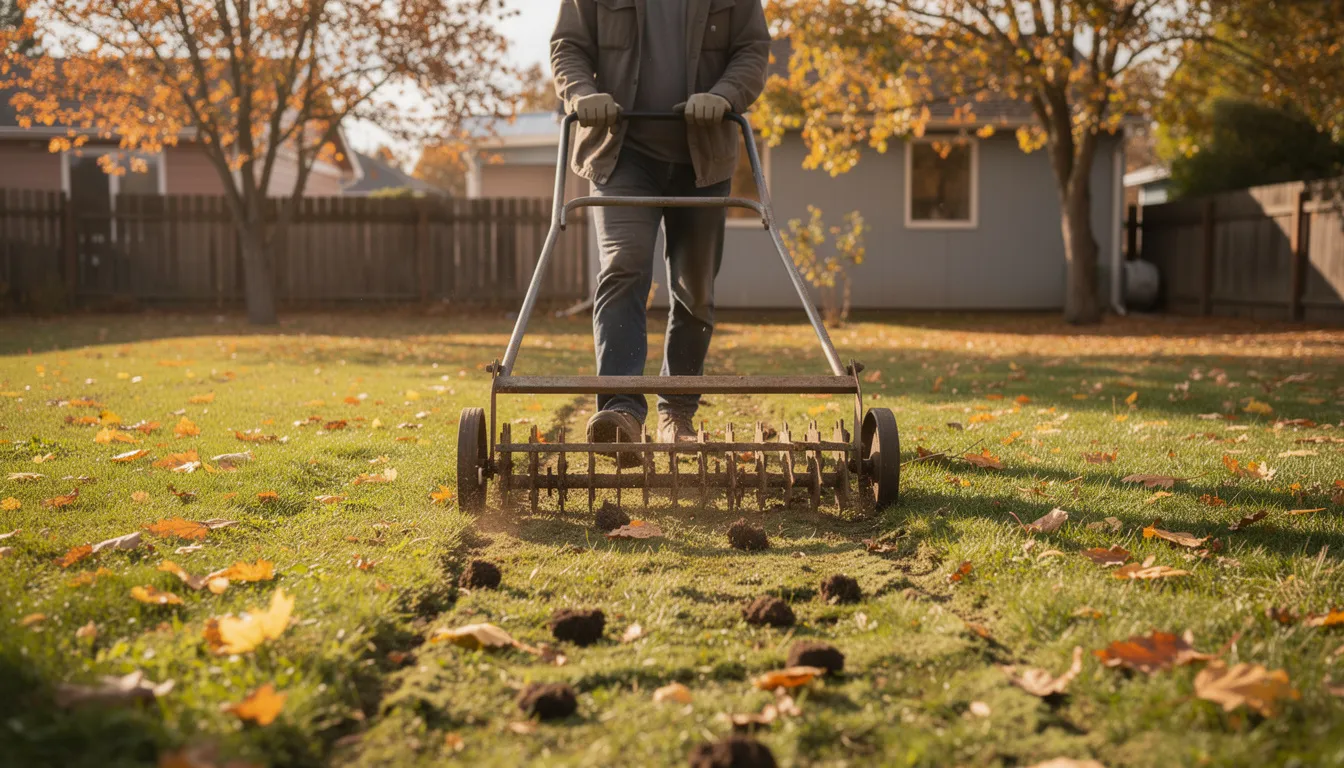
Aeration relieves compaction from foot traffic, improves drainage, and helps fertiliser and water reach the root zone. Options include:
-
Spiking with a garden fork or wheeled aerator (less invasive, suitable for light compaction)
-
Hollow-tining with a machine that extracts 8–10cm plugs at 5–10cm spacing (more intensive, ideal for heavy clay or severely compacted lawns)
GREENER’s Transformation service typically combines aeration and scarification with overseeding and feeding to rebuild a thicker, greener sward on tired lawns—addressing all the hidden problems at once rather than tackling them piecemeal over several years.
Lawn problems that stop grass greening (and how GREENER fixes them)
Many homeowners “do everything right” yet still struggle with dull, patchy lawns because of underlying issues that no amount of feeding alone will fix.
Common UK problems and their impact on greenness:
|
Problem |
How it affects colour |
Solution approach |
|---|---|---|
|
Moss takeover |
Shades soil, holds excess moisture, crowds out grass |
Iron treatment, improve drainage, reduce shade where possible |
|
Broadleaf weeds |
Compete for nutrients, spread aggressively |
Selective weed control that targets weeds without harming grass |
|
Dog urine scorch |
Concentrated nitrogen burns patches yellow |
Water affected areas immediately, overseed bare patches |
|
Worn footpaths |
Compaction limits root access to air and water |
Aerate heavily, overseed with wear-tolerant varieties |
|
Heavy shade |
Insufficient light for photosynthesis |
Choose shade-tolerant grass type, prune overhanging branches |
GREENER’s POWER and BOOST treatments act as targeted interventions: selective weed control for a weed free lawn, moss management with iron, reseeding patches, and improving problem areas with soil amendments. The goal is solving root causes—shade, drainage, compaction—rather than simply applying more fertiliser to force colour that won’t last.
Addressing these underlying issues has many benefits beyond appearance. Healthy grass resists pests and disease better, recovers faster from stress, and requires less intervention in the long run.
Choosing and improving grass types for lasting green
Not all grass is created equal. The main species used in UK lawns differ significantly in colour, fineness, and wear tolerance:
-
Perennial ryegrass – Fast-establishing, wear-tolerant, stripes well, naturally darker green. The backbone of most UK lawn seed mixes.
-
Fescues (red fescue, chewings fescue) – Fine-leaved, shade-tolerant, drought-resistant, but less wear-tolerant. Better for ornamental lawns than kickabout gardens.
-
Smooth-stalked meadow grass – Self-repairing via underground runners, excellent for heavy-use areas, takes longer to establish.
Some mixes naturally look darker and stripe better, while others cope better with shade, drought, or heavy play from children, animals, and birds. Choosing the right grass type for your specific conditions reduces the need for constant feeding and watering to maintain a rich green colour.
For tired, established lawns with thin coverage, overseeding with modern dwarf perennial ryegrass cultivars boosts colour and density without the expense and disruption of full re-turfing. Broadcast seed at 30–50g per square metre after scarification or aeration for best results.
GREENER assesses existing turf and recommends seed mixes suited to each garden’s use—whether that’s a pristine ornamental front garden, a family lawn that takes daily football practice, or a shaded patch under mature trees where standard mixes would struggle.
Next steps: start your lawn greening journey with GREENER
A consistently green lawn comes from correct mowing, smart feeding, good soil health, and seasonal timing rather than quick-fix products alone. The homeowners who achieve the best results are those who maintain regular maintenance year-round rather than panic-buying miracle cures when things go wrong.
GREENER’s Transformation plus Seasonal Care system—built around GROWTH, POWER, and BOOST—removes the guesswork entirely. Professional-grade products, correctly calibrated for UK conditions, applied at the right time in the right way. No more buying six different bags from the garden centre and hoping something works.
Take a moment to look at your lawn now. Do you need a full renovation to fix years of neglect, or simply better seasonal care to unlock the deeper green that’s waiting underneath? Either way, there’s a clear path forward.
Ready to make your grass the envy of the street?
Visit https://grassisalwaysgreener.co.uk/ to request a lawn assessment or start your GREENER plan today.
With the right guidance, most UK lawns can become thicker, darker, and more enjoyable within a single growing season. Yours could be one of them—and generally, it’s far easier than you’d expect once you stop guessing and start following a proven system.


