


If you’ve ever looked at your neighbour’s lawn and wondered how they get it so green and striped while yours looks a bit tired, the answer often starts with one simple thing: how you mow. Lawn mowing is the single most frequent job you’ll do in your garden, and getting it right makes every other aspect of lawn care work harder for you. This guide covers everything UK homeowners need to know—from timing and technique to choosing the right mower and linking your mowing routine to a complete lawn transformation.
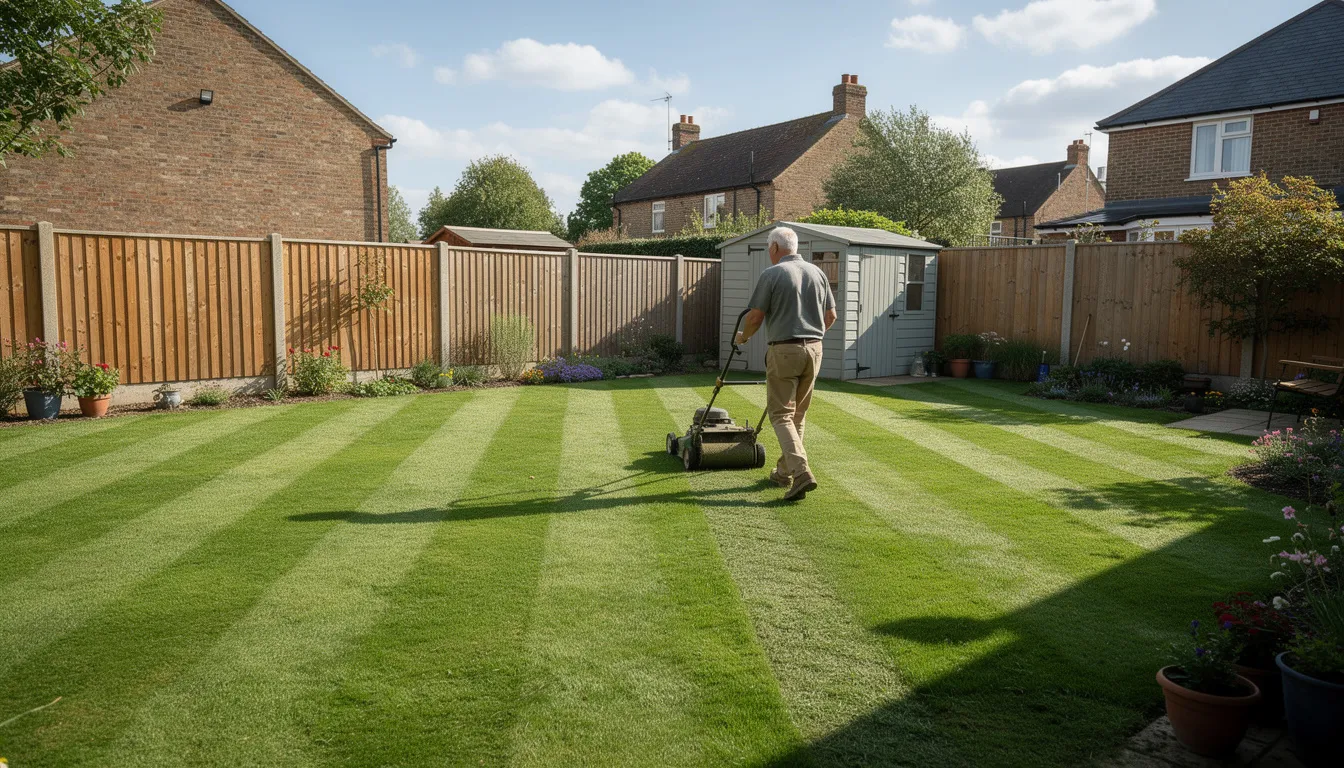
Quick-start mowing rules for a greener UK lawn
Short on time? This section gives you the essentials. Mowing is the one job that makes the quickest visible difference to your outdoor space, so if you only read one section, make it this one.
Core mowing rules to follow:
-
Mow regularly from March to October, adjusting frequency to growth rate
-
Never remove more than one-third of the leaf blade in a single cut
-
Avoid cutting when grass is wet, frosty, or waterlogged
-
Keep your mower blades sharp—blunt cuts damage grass and invite disease
-
Match your cutting height to the season (lower in spring, higher in summer heat)
UK mowing calendar at a glance:
|
Period |
Frequency |
Notes |
|---|---|---|
|
March–May |
Weekly (if growing fast) |
Gradually lower height as growth picks up |
|
June–August |
Every 7–10 days |
Raise height during hot, dry spells |
|
September–October |
Weekly to fortnightly |
Support autumn recovery |
|
November–February |
Only if growth demands |
Keep height high, only cut on dry, firm ground |
GREENER’s Transformation and Seasonal Care programmes—GROWTH, POWER, and BOOST—are built around these mowing principles. Each treatment is timed to work with your mowing schedule, so every cut counts towards a thicker, healthier lawn.
Ready to get a tailored mowing and treatment plan for your postcode? Visit grassisalwaysgreener.co.uk to start your lawn transformation.
Why mowing matters more than you think
Here’s something that surprises most homeowners: mowing isn’t just about keeping grass short. It fundamentally changes how your grass plants grow and develop.
When you cut grass correctly, you encourage a process called tillering—where each plant produces more side shoots rather than growing taller. This creates a denser sward with more blades per square centimetre, deeper roots, and a surface that naturally crowds out weeds and moss. A well-mown lawn photosynthesises more efficiently, stores more energy in its root system, and recovers faster from wear, drought, and disease. It’s the difference between grass that merely survives and grass that thrives.
What poor mowing actually causes:
The bad news is that poor mowing directly creates the problems most UK gardeners complain about:
-
Blunt blades tear grass tips, leaving brown, frayed edges that dry out and invite fungal disease
-
Cutting too short (scalping) weakens grass, encourages moss, and leaves bare patches where weeds colonise
-
Irregular mowing schedules stress grass plants, causing yellowing after hot weather and patchy growth
This is why GREENER’s system connects feeding to mowing. GROWTH (spring feed), POWER (summer resilience), and BOOST (autumn recovery) all work best when combined with correct mowing height and frequency. Without proper mowing, even premium fertiliser can’t deliver its full potential.
The encouraging truth? Consistent, thoughtful mowing can often improve a tired lawn within four to six weeks—especially when combined with a professional fertiliser programme. Regular mowing helps grass thicken up faster than almost any other single change you can make.
Choosing the right mowing height for UK lawns
Getting mowing height right is one of the most misunderstood aspects of lawn care. Many homeowners cut too short, thinking it means mowing less often. In reality, this “scalping” weakens grass, burns it in summer, and creates perfect conditions for weeds and moss to take over.
The one-third rule explained:
Never remove more than one-third of the grass blade in a single mow. If your lawn is 60mm tall, only cut it back to 40mm. Taking off more shocks the plant, reduces its ability to photosynthesise, and forces it to use energy reserves that should be building strong roots.
Recommended cutting heights for UK lawns:
|
Season |
Height |
Reason |
|---|---|---|
|
Spring (late March–April) |
25–35mm |
Lower gradually as growth accelerates |
|
Summer (May–August) |
35–50mm |
Higher during peak heat hours to prevent scorch |
|
Autumn (September–October) |
30–40mm |
Support recovery and root development |
|
Winter (November–February) |
40–50mm |
Only if growth demands and ground is firm |
Matching height to your lawn goals:
-
Family/play lawns: Keep slightly higher (40–50mm) for toughness and wear resistance
-
Showpiece/ornamental lawns: Can be kept shorter (25–35mm) but need more frequent cuts and closer attention
-
Shaded areas: Always keep slightly higher to maximise the leaf area available for photosynthesis
Before holidays or heatwaves: Raise the mower one or two notches. This protects against scorch and drought stress while you’re away. It’s far better to come home to slightly longer grass than a brown, stressed lawn.
GREENER’s lawn review can confirm whether your current mowing height matches your grass type, soil conditions, and shade levels—visit the website for further information.
When and how often to mow in the UK climate
Mowing frequency should match growth rate, not a fixed calendar date. Growth depends on temperature, daylight hours, moisture, and whether you’ve recently applied fertiliser. Here’s a practical month-by-month guide for the UK climate.
Month-by-month mowing guideline:
|
Month |
Guidance |
|---|---|
|
February–early March |
Only mow if growth is obvious and ground is dry and firm |
|
Late March–April |
Start regular mowing, usually every 7–10 days |
|
May–June |
Peak growth; mow weekly, sometimes twice weekly after GROWTH feeds |
|
July–August |
In dry spells, reduce to every 10–14 days but raise cutting height |
|
September–October |
Return to weekly or 10-day mowing to support BOOST treatments |
|
November–January |
Usually no mowing; only clip very light growth on dry, mild days |
Best mowing time of day:
Avoid mowing during midday heat in summer. The hottest part of the day stresses both you and your lawn. Early morning (once dew has dried) or late afternoon when temperatures drop are ideal mowing times. Early birds who mow at dawn should wait until the grass has dried—wet grass tears rather than cuts cleanly.
When to skip mowing entirely:
-
Waterlogged ground (your footprints leave squelchy impressions)
-
Frozen or frosty grass (you’ll hear a “crunch” underfoot)
-
Drought-stressed grass showing grey-blue colouring
-
Snow cover of any depth
GREENER’s Seasonal Care emails remind customers when to adjust mowing frequency as UK weather patterns shift—helping you stay ahead of changing conditions.
Mowing technique: how to cut for a thicker, stripey lawn
Great mowing isn’t just about frequency and height—technique matters too. With the right approach, you can achieve that classic “bowling-green from the kitchen window” look that makes a conventional lawn look professionally maintained.
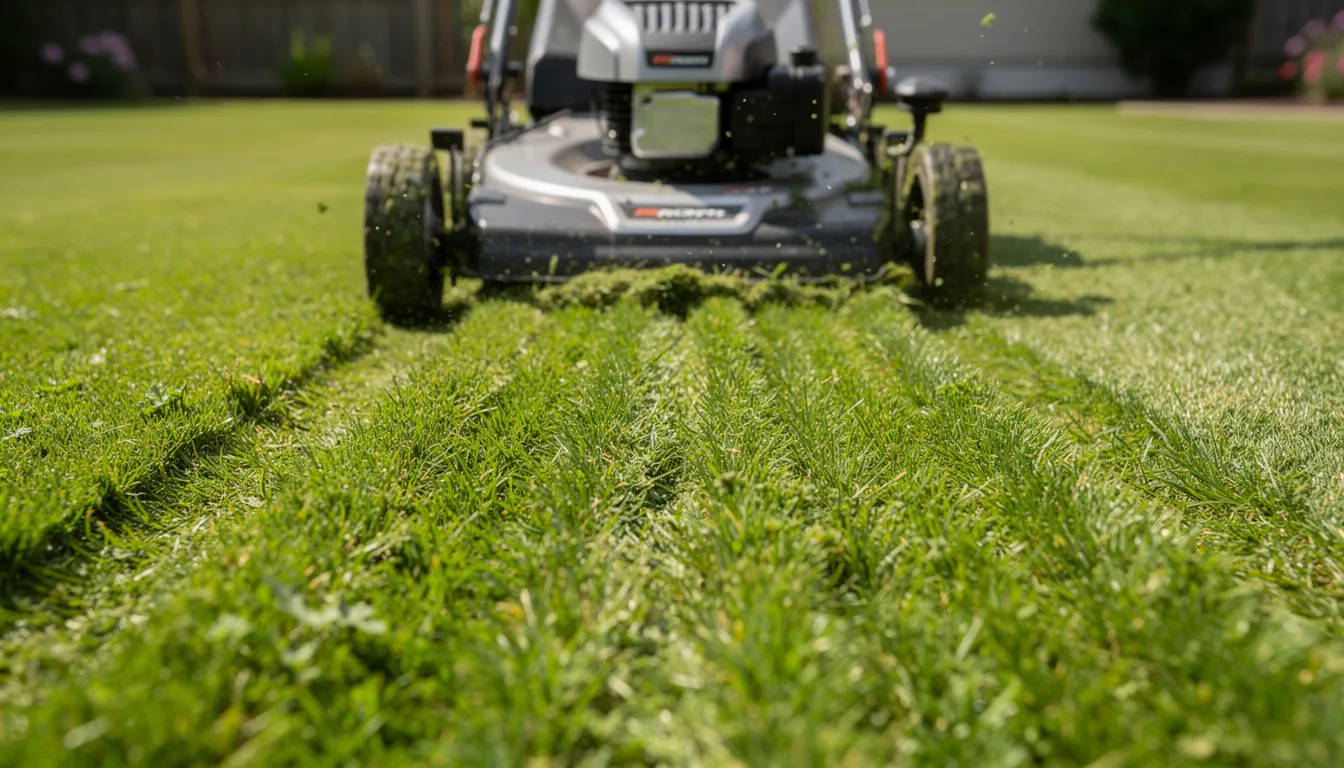
Setting up correctly before each mow:
-
Check blade height on a small test area before committing to the whole lawn
-
Ensure grass is dry (wet grass clumps and tears)
-
Clear debris: stones, toys, sticks, and any other tools left on the lawn
-
Walk the lawn first to spot any issues like molehills or soft spots
Creating even coverage:
-
Overlap each pass slightly (10–15cm) to avoid missed strips
-
Change direction week to week: north–south one week, east–west the next, then diagonals
-
This prevents ruts, grain, and compaction patterns from forming
-
For small gardens, mow edges first, then fill in the middle with straight lines
Tips for perfect stripes:
-
Use a mower with a rear roller if possible—this is what creates the stripe effect
-
Walk at a steady, consistent pace (don’t rush or dawdle)
-
Pick a distant point—a fence post or tree—and walk towards it to keep lines straight
-
Finish with a final pass in the main viewing direction from your house or patio
Safety essentials:
-
Always wear sturdy footwear (not sandals or bare feet)
-
Keep children and small creatures like pets off the lawn while mowing
-
Never reach under the deck while blades are moving
-
Disconnect power or remove batteries before checking or cleaning blades
Consistent mowing technique pairs perfectly with GREENER’s POWER treatments in summer—keeping stripes vivid and colour strong even during the hottest hours.
Never mow wet, frosty or waterlogged grass
Timing matters as much as technique. Grass cutting at the wrong moment can undo weeks of good care and create problems that take months to fix.
Why to avoid mowing wet grass:
-
Clumps and clogs the mower, leaving uneven piles that smother grass beneath
-
Tears rather than cuts cleanly, creating ragged wounds that invite disease
-
Spreads fungal spores across the lawn surface
-
Mower wheels rut soft soil and cause compaction
Why to avoid mowing frosty grass:
-
Frozen grass blades are brittle and shatter rather than cut
-
Creates grey or brown patches that take weeks to recover
-
Walking on frost damages the cell structure of grass plants
Why to avoid mowing waterlogged ground:
-
Mower weight compresses saturated soil, squeezing out air from the root zone
-
Creates compaction that restricts drainage and root growth
-
Tears grass from loosened soil rather than cutting it
Practical tests before mowing:
|
Condition |
Test |
What it means |
|---|---|---|
|
Wet/soft soil |
Footprints linger and don’t spring back |
Wait for ground to firm up |
|
Frost |
Grass makes a “crunch” sound underfoot |
Wait until late morning or early afternoon |
|
Waterlogging |
Squelching underfoot, water pools in footprints |
Wait several days for drainage |
Lawns repeatedly mown in poor conditions often develop compaction and moss problems. GREENER can tackle these with aeration and tailored treatments—but prevention through smart timing is always easier than cure.
Sharp blades and mower care
Your mower is a precision tool that needs looking after, just like your lawn. The difference between sharp and blunt mower blades is surprisingly dirty in terms of the damage blunt cutting causes—and shockingly visible on your grass tips.
Sharp vs blunt cuts:
-
Sharp blades: Leave a neat, pale green edge that heals quickly
-
Blunt blades: Leave frayed, brown tips that dry out faster and invite disease
Run your hand across freshly mown grass. If the tips feel rough or look brown within a day or two, your blades need attention.
Blade maintenance schedule:
|
Mower type |
Check frequency |
Action |
|---|---|---|
|
Rotary mowers |
Every 4–6 weeks in growing season |
Sharpen with kit or professionally twice yearly |
|
Cylinder mowers |
Monthly visual check |
Professional servicing for accurate adjustment |
|
Robotic mowers |
Every 4–8 weeks |
Replace small blades as per manufacturer guidance |
Safe cleaning habits after each mow:
-
Disconnect power completely (unplug electric mowers, remove batteries from cordless, disconnect spark plug on petrol mowers)
-
Brush off grass clippings from the deck and underside
-
Wipe underside gently if needed—never hose electric motors
-
Store in a dry location to prevent rust
Annual service recommendation:
Book a professional service before March for petrol mowers and electric mowers alike. A well-maintained machine supports all GREENER treatment work by giving consistently clean, even cuts throughout the season. Lawn mowers that struggle, stall, or cut unevenly undermine even the best fertiliser programme.
Picking the right mower for your garden and lifestyle
The “best” mower doesn’t exist—only the right mower for your lawn size, slope, budget, and how much effort you realistically want to invest. Here’s what to consider.
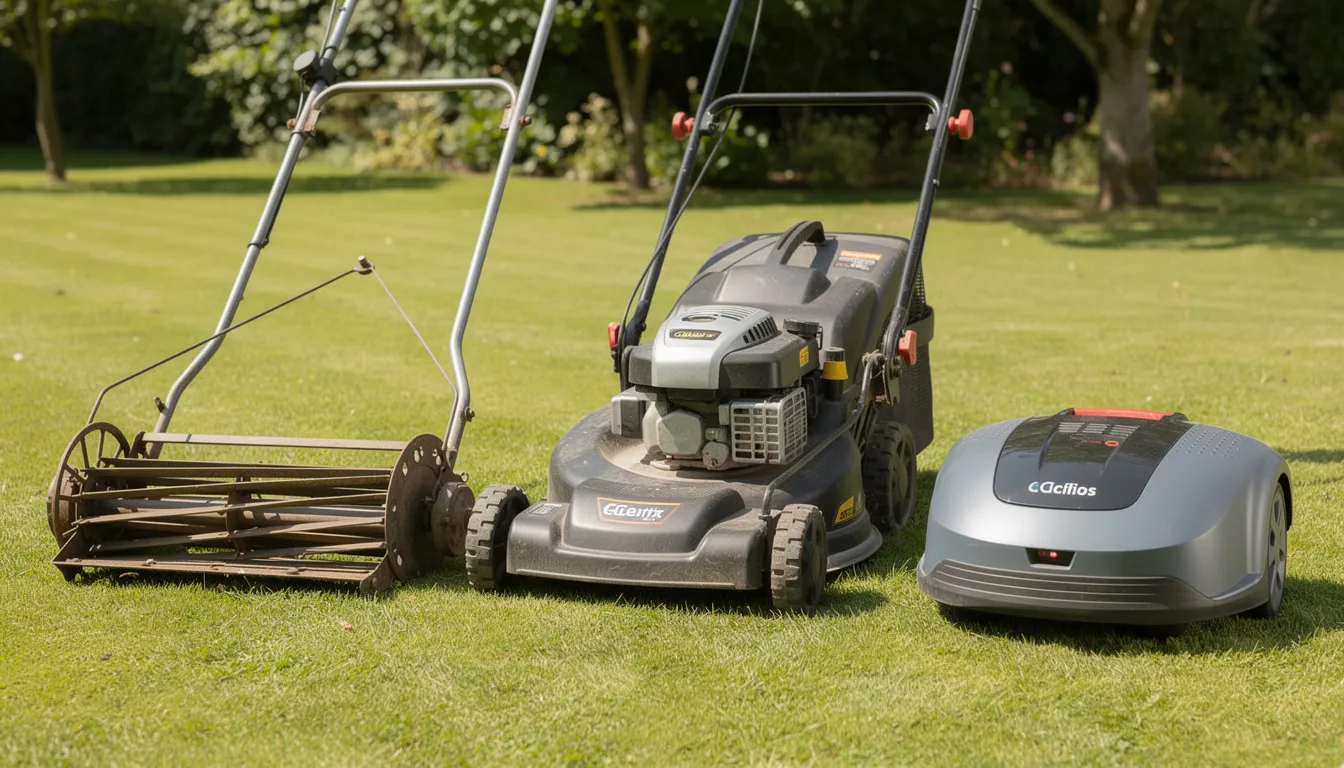
Main mower types explained:
|
Type |
Best for |
Considerations |
|---|---|---|
|
Cylinder mowers |
Short, fine ornamental lawns |
Need regular sharpening; require flat surfaces |
|
Rotary mowers |
Most UK family lawns |
Versatile all-rounders; handle varying heights well |
|
Hover mowers |
Slopes and uneven areas |
Lighter and more manoeuvrable; less effective on long grass |
|
Rear-roller mowers |
Creating stripes; neat edges |
Combine cutting with rolling for that classic look |
|
Robotic mowers |
Low-effort, frequent micro-cuts |
Work brilliantly with professional feeding programmes |
Guidance by lawn size:
-
Small (under 100m²): A push mower or cordless electric works well; easy to store and maintain
-
Medium (100–400m²): Consider a wider rotary or rear-roller mower; self-propelled options reduce effort
-
Large (over 400m²): Self-propelled or ride-on saves significant time and fatigue
Environmental and practical considerations:
-
Electric mowers (corded and cordless) are quieter, produce no direct emissions, and need less maintenance than petrol mowers
-
A gas mower offers more power for large areas but creates noise pollution and requires more upkeep
-
Consider storage space—smaller gardens may struggle with large ride-on equipment
-
Cordless mowers need battery management; check runtime matches your lawn size
Leaf blowers and other tools often complement your mower for seasonal cleanup, but the mower remains your most-used piece of equipment.
Think of your mower as part of a system that includes GREENER’s treatment schedule. The right mower, used correctly, maximises the benefit of every feed and treatment you apply.
Mowing for thicker grass, fewer weeds and less moss
Here’s something many lawn care companies don’t emphasise enough: mowing height and frequency are powerful weed control tools when used correctly.
How mowing suppresses weeds and moss:
Keeping grass at 30–40mm with regular cuts creates a dense canopy that shades the soil surface. Most weed seeds and moss spores need light to germinate and establish. When your grass is thick and consistent, it naturally outcompetes these unwanted plants for light, water, and nutrients.
What goes wrong with scalping:
Cutting very short weakens grass so it can’t compete. The sward thins, gaps appear, and suddenly daisies, plantains, clover, and moss have the space and light they need to move in. A lawn scalped repeatedly in spring often develops serious weed and moss problems by summer.
A recovery routine for troubled lawns:
-
Raise the cutting height immediately—go to 40–50mm
-
Mow consistently every 7–10 days throughout the growing season
-
Allow longer grass to shade out weed seedlings and moss
-
Combine with GREENER’s Transformation programme (scarification, aeration, overseeding, and targeted weed/moss control) for best results
A note on grass clippings:
Clippings left on the lawn occasionally—when growth is light and weather is dry—can recycle nutrients back into the soil. But heavy, wet clippings should always be collected. They smother grass underneath and create conditions for fungal disease. It’s worth noting that grass clippings from a healthy lawn can be surprisingly dirty with debris, so check them before composting.
Seasonal mowing tweaks: spring, summer, autumn, winter
UK lawns are living systems that change with the seasons. Your mowing should change too. Shifting mowing practices through the year keeps your lawn in sync with its natural growth patterns.
Spring (March–May):
-
Gradually lower the cut over several mows rather than going short immediately
-
Increase frequency as temperatures rise—especially after GREENER GROWTH feeds
-
This is the only time to really establish your stripe pattern for the year
-
Shape edges and define boundaries while growth is vigorous
-
Watch for seed heads on grass as growth picks up
Summer (June–August):
-
Raise height during hot or dry spells to 40–50mm
-
Mow in cooler parts of the day—late afternoon is ideal
-
Avoid mowing drought-stressed grass showing grey-blue colouring
-
Reduce frequency to every 10–14 days in dry periods to let grass grow longer
-
POWER treatments support deeper roots and drought tolerance during this demanding period
Autumn (September–October):
-
Maintain regular mowing but slightly higher than peak spring
-
Use mowing to collect fallen leaves—they smother grass if left
-
Late autumn is the time to pair mowing with BOOST treatments for recovery
-
Prepare the lawn for winter dormancy with consistent care
Winter (November–February):
-
Only mow if growth really demands it, ground is firm, and temperatures are above freezing
-
Keep height high and avoid turning sharply on soft turf
-
Reduced winter mowing gives soil time to recover from compaction
-
Focus on keeping your garden tidy rather than active grass cutting
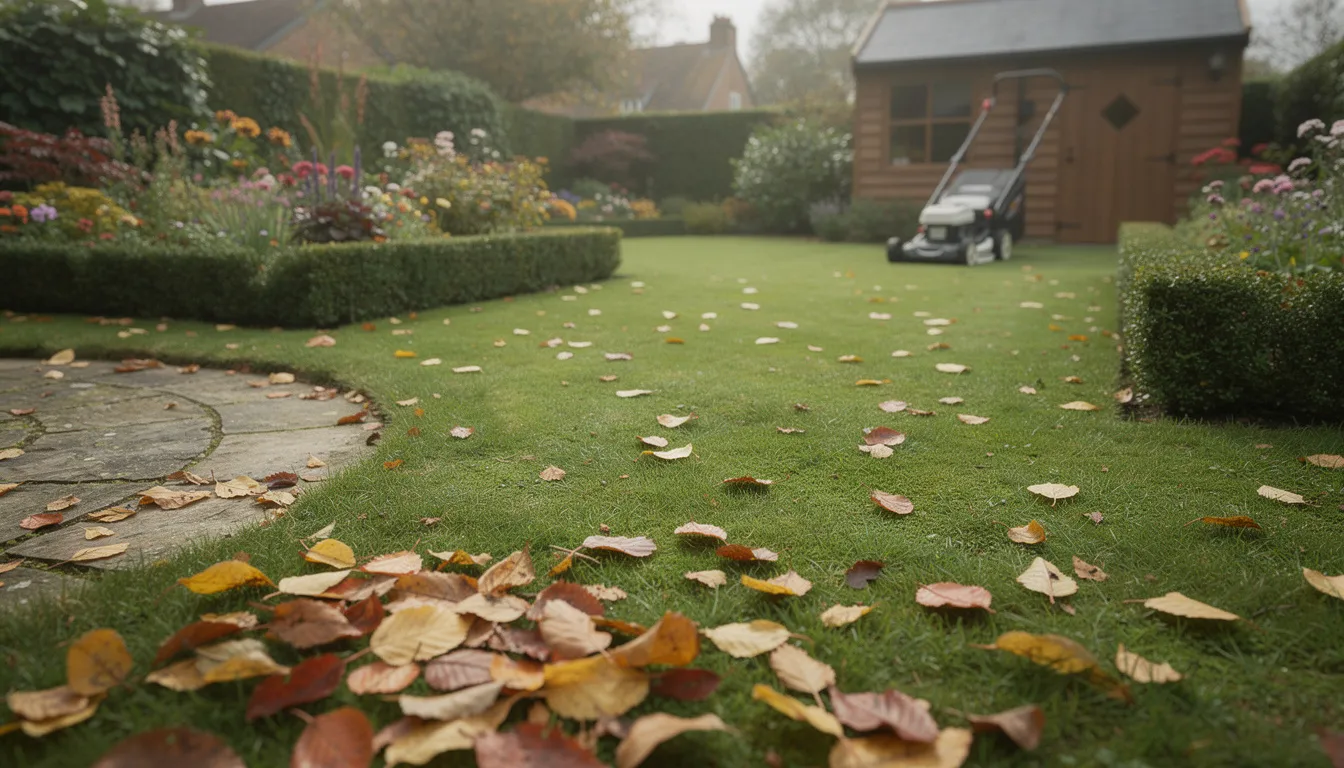
Wild corners, “No Mow May” and nature-friendly lawns
A well maintained lawn doesn’t have to mean every blade is exactly the same height. Many UK homeowners are discovering that combining a neat main lawn with wilder areas supports local wildlife while still looking intentional and attractive.
Understanding No Mow May:
No Mow May is a campaign encouraging people to delay mowing some or all of their lawn during May. This allows clover, daisies, and other flowers to bloom and feed bees, butterflies, and other pollinators. Some areas adopting this approach have seen significant increases in pollinator activity.
Practical options for nature-friendly lawns:
-
Leave just a section—back corners or a strip along a fence—to grow longer all season
-
Mow paths through longer grass to keep it usable and show it’s intentional, not neglected
-
Resume mowing in June or later, stepping height down gradually to avoid shocking the grass
-
Consider a rule bans lawn mowing in certain zones permanently to create mini-meadows
Balancing wildlife and family use:
You can absolutely keep your garden looking smart while supporting biodiversity. The main lawn stays clipped and usable for children’s play and entertaining; just a section stays wild for nature. Mark out different mowing zones so the whole family understands which bits stay long and which stay short.
GREENER can advise how to balance wildlife goals with family use—it’s a deeply personal choice that reflects your values and lifestyle. A thoughtful perspective on your yard can accommodate both great mowing results and environmental responsibility.
Many homeowners find this approach brings clarity to their lawn care and creates something to enjoy beyond just a conventional lawn. Following local guidelines for wildlife gardening often reveals better prices on wildflower seeds and brings a strong background of community spirit to your outdoor space.
Linking mowing to a full lawn transformation
Correct mowing is the foundation—but the best results happen when it’s part of a complete system. Think of mowing as the daily habit that maximises every other investment you make in your lawn.
How GREENER’s Transformation programme works with mowing:
-
Scarification removes thatch, allowing your mowing routine to work on healthy, active grass
-
Aeration opens compacted soil so grass plants can root deeply—then regular mowing encourages tillering for density
-
Overseeding fills gaps, and consistent mowing at the right height helps new seedlings establish without competition
-
Targeted weed and moss control clears problems, while correct mowing prevents their return
How Seasonal Care connects to your mowing schedule:
-
GROWTH (spring): Applied as you increase mowing frequency, supercharging new growth
-
POWER (summer): Maintains colour and resilience during restricted hours of high heat
-
BOOST (autumn): Supports recovery when you’re winding down regular mowing
A typical transformation example:
A semi-detached garden with patchy, moss-prone grass begins the GREENER system in March. The homeowner starts mowing weekly at 30–35mm, rising to 40mm in summer’s hottest part. Combined with GROWTH, POWER, and BOOST treatments plus autumn overseeding, the lawn shows a big difference within one season—thicker coverage, fewer bare patches, and stripes that actually hold.
Whether you’re a dedicated writer about gardening, someone with reader focused content interests, or simply want to keep your garden looking its best, the principles remain the same. Even St John would appreciate a lawn this good, as the evangelist RC lawn lovers might say.
Ready to see what your lawn can become?
Visit grassisalwaysgreener.co.uk to book a lawn assessment and receive a mowing plan matched to your garden, soil, and schedule. Comparing quotes from other services? GREENER brings clarity to what actually works. Whether you’re dealing with a new rule about mowing ban hours in your area, concerned about air quality from petrol equipment, or simply want cleaner equipment and a simpler approach—we’re here to help.
Stop guessing. Start growing. Your transformation begins with understanding how to make yard work work for you—and the life of your lawn starts with that very first correct cut.


