


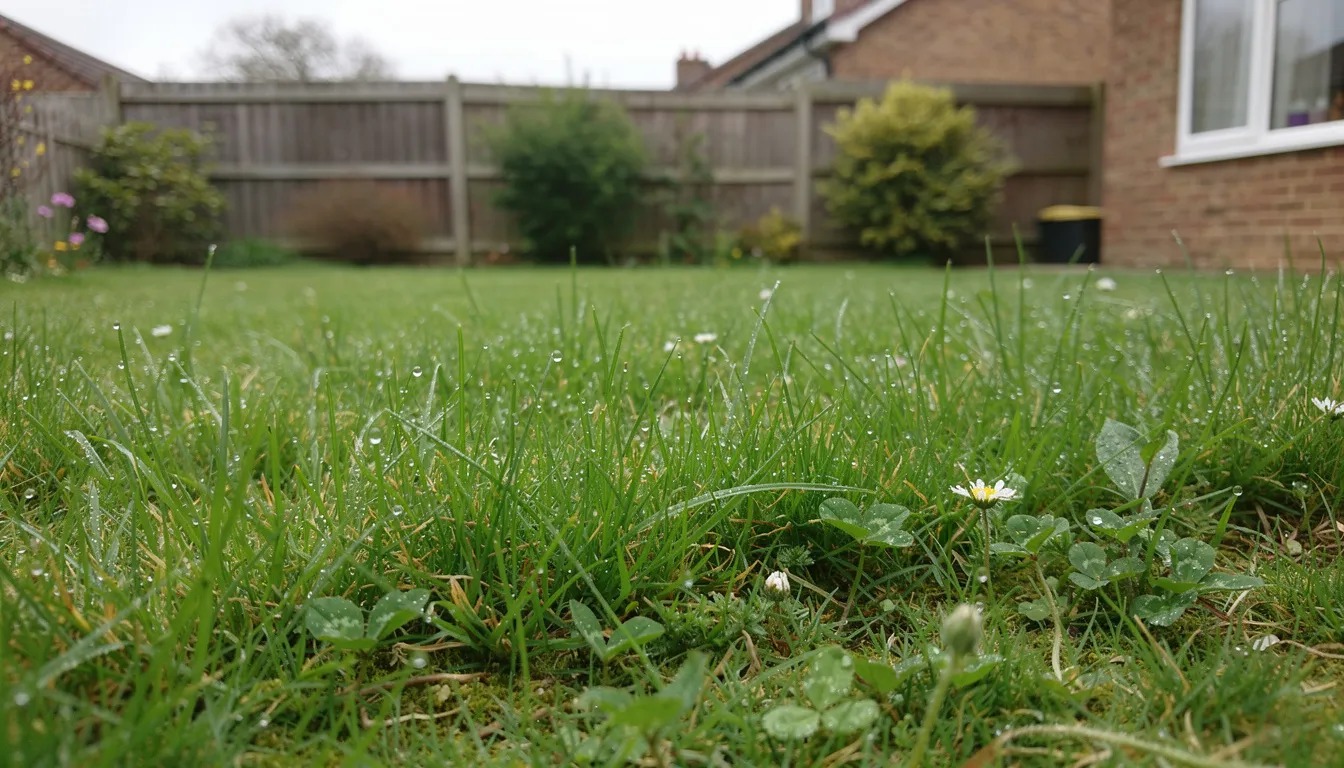
If your lawn is looking a bit thin, patchy or tired after a tough winter, you’re not alone. Thousands of UK homeowners face the same problem every spring and autumn – and the good news is that lawn feed with seed offers a straightforward solution. These products contain lawn seed as a key component, helping to thicken and repair lawns by introducing new grass growth alongside essential nutrients. This guide walks you through everything you need to know, from understanding how these products work to applying them correctly for your UK garden, so you can achieve a thicker, healthier lawn without the guesswork.
What is lawn feed with seed – and when should you use it?
Lawn feed with seed is exactly what it sounds like: a combined fertiliser and grass seed product designed to feed your existing lawn while filling in bare or thin patches at the same time. Instead of buying separate bags and trying to figure out application rates and timing, you get both components in one convenient product. GREENER uses a lawn fertiliser with Myco-Start to enhance repair and seed growth as part of our Transformation Kit.
This is especially useful for UK homeowners dealing with the aftermath of wet winters, moss damage, or wear and tear from children, dogs and garden furniture. Rather than staring at bare patches and wondering where to start, a feed-with-seed approach simplifies the whole process. You save time by doing two jobs at once, you remove the guesswork of matching fertiliser strength to new seedlings, and you improve both the colour and density of your lawn in a single application. The result is a lawn that looks fuller and feels healthier underfoot within weeks rather than months. Lawn feed with seed is also ideal for establishing a new lawn or overseeding newly prepared areas, as it provides the nutrients and seed needed for strong germination and root development.
In the UK, the ideal usage windows for lawn feed with seed are spring (March through May) and early autumn (late August to mid-October). These seasons offer the soil temperatures and natural rainfall that grass seed needs to germinate reliably – typically around 10–18°C. For more detail on timing and technique, see our guide to the best time of year to reseed your lawn in the UK. Spring suits renovation work after winter damage, while autumn is often considered the prime time for overseeding, as cooling soils and regular rain reduce your watering load significantly.
GREENER is a premium UK lawn care system that takes this combined approach further, integrating lawn feed and seed within a wider Transformation and Seasonal Care programme. With products like GROWTH, POWER and BOOST timed specifically for UK conditions, the system removes the trial-and-error from achieving a lawn you can be proud of. You can learn more about the team and philosophy behind this system on our About GREENER lawn care service page.
How lawn feed with seed works (the science made simple)
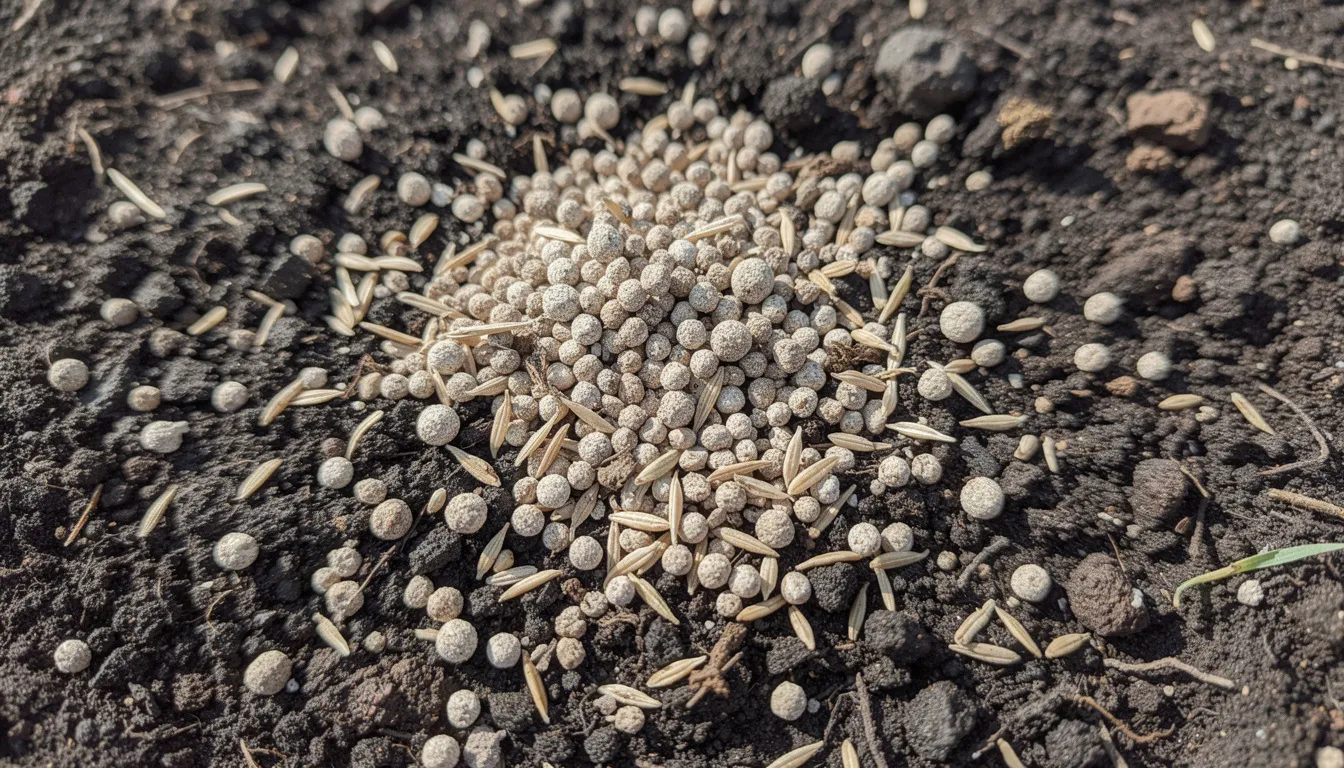
Understanding how fertiliser and seed work together helps you get better results and avoid common mistakes. In quality products, essential nutrients are contained within each granular particle, ensuring even distribution and consistent nutrient availability across the lawn. This section breaks down the science in plain English, so you know exactly what’s happening when you spread product on your lawn.
The fertiliser side
Lawn fertilisers typically contain three key nutrients, often shown as an NPK ratio on the bag:
|
Nutrient |
What it does |
Why it matters for your lawn |
|---|---|---|
|
Nitrogen (N) |
Promotes leaf and stem growth |
Delivers that rich green colour and fast visible improvement |
|
Phosphorus (P) |
Supports root development |
Helps new seedlings establish a strong root system quickly |
|
Potassium (K) |
Builds stress resistance |
Improves drought tolerance and resilience through UK seasons |
|
A balanced formulation around 10-5-10 or similar provides enough nitrogen to green up your existing lawn without burning delicate new seedlings, while the phosphorus kick-starts root growth. This nutrient synergy is why studies show 25–40% better establishment rates when seed is combined with appropriate fertiliser, compared to seed alone. |
|
|
The seed side
Most UK lawn feed with seed products use a blend of grass types chosen for our climate. If you want to go deeper into matching seed to your conditions, our best grass seed for UK lawns buyer’s guide explains mix options for different uses, soil types and levels of wear. Perennial ryegrass germinates quickly (often within 7–14 days) and provides fast coverage, making it ideal for filling gaps. Finer fescues grow more slowly but deliver a softer, denser finish and handle shade better than ryegrass.
This varietal diversity matters because it improves your lawn’s adaptability to seasonal stresses – from wet, grey winters to the occasional dry summer spell. A good mix means some grass types thrive whatever the weather throws at your garden.
How they work together
The feed boosts your existing lawn while the seed fills gaps, and over time this combination helps crowd out weeds and moss. Thicker grass coverage shades the soil surface, making it harder for unwanted plants to establish. Research suggests lawns overseeded annually show up to 30% reduced disease incidence, simply because a dense, healthy lawn naturally outcompetes pathogens and weeds.
GREENER’s GROWTH and POWER products are specifically timed and balanced to work alongside overseeding, avoiding the common mistake of applying strong weed-and-feed formulations that can harm new grass growth before it establishes.
When to choose lawn feed with seed (and when not to)
Timing and lawn condition dictate whether a combined feed-and-seed product is right for your situation, or whether you need a bigger renovation effort first. Getting this decision right saves you money and frustration.
Ideal scenarios for lawn feed with seed
Lawn feed with seed works brilliantly when your lawn is slightly thin rather than completely bare. It’s perfect for filling small bare patches after winter, repairing wear from kids and dogs, or thickening areas that have been scarified to remove moss and thatch. If your lawn is around 70–80% grass with scattered thin spots, a feed-with-seed application can restore it to full coverage within 6–8 weeks.
When it’s not enough
However, lawn feed with seed isn’t a magic fix for every problem. In some cases, additional techniques such as lawn topdressing to improve soil and root health can make a big difference. Here are situations where you’ll need a different approach:
-
Severe compaction: If water pools on your lawn or the soil feels rock-hard, you need thorough aeration first. Studies show germination success drops to around 50% on un-aerated clay soils.
-
Heavy moss infestation: A lawn that’s more than 40–50% moss requires targeted moss control before overseeding, otherwise moss simply regrows through the new grass.
-
Weed-dominated lawns: When weeds make up more than half your lawn, you need a full renovation programme. This is where GREENER’s Transformation approach comes in, tackling weeds and moss before introducing new seed.
-
Extreme weather: Avoid using feed-with-seed when frost is likely, during summer heatwaves above 25°C (which can halve germination rates), or when the ground is waterlogged.
Grass seed germinates reliably when soil temperatures sit between 8–18°C. You can check this with an inexpensive soil thermometer, or simply wait until daytime air temperatures are consistently above 10°C for a couple of weeks.
If you’re unsure about your lawn’s condition, a simple checklist helps: check thatch depth (more than 1cm needs scarifying), assess moss coverage, and estimate what percentage of your lawn is bare. If problems are widespread, following GREENER’s recommended Transformation pathway delivers better long-term results than repeatedly patching a fundamentally weak lawn, and many gardeners find that a lawn subscription kit is worth it for taking the guesswork out of ongoing care.
How to apply lawn feed with seed step-by-step (UK conditions)
This section is your practical walkthrough from preparation to first mow, written for a typical UK homeowner with a 50–150m² garden. Follow these steps for the best chance of success, and explore our wider collection of step-by-step lawn care guides for more detailed topics.
Step 1: Prepare your lawn
Before applying anything, you need to give your seed the best possible chance of making contact with soil:
-
Mow to around 25–35mm – shorter than usual, but not scalped. Collect all clippings.
-
Rake or scarify – remove dead moss, thatch and debris so seed reaches soil rather than sitting on a layer of organic matter. A spring-tine rake works for light work; hire a powered scarifier for larger areas.
-
Spike compacted areas – push a garden fork 10–15cm deep every 10–15cm across heavily trafficked zones. This helps water, air and roots penetrate.
Step 2: Measure your lawn area
Calculate your lawn size by measuring length × width, then subtract patios, beds and paths. For irregular shapes, break the lawn into rectangles and add them together. Knowing your exact coverage helps you purchase the right quantity and apply at the correct rate – typically around 35–50g per square metre for most feed-with-seed products. Check the product packaging, which usually lists the weight in kg, to determine how many kilograms you need for your lawn area.
Step 3: Spread evenly
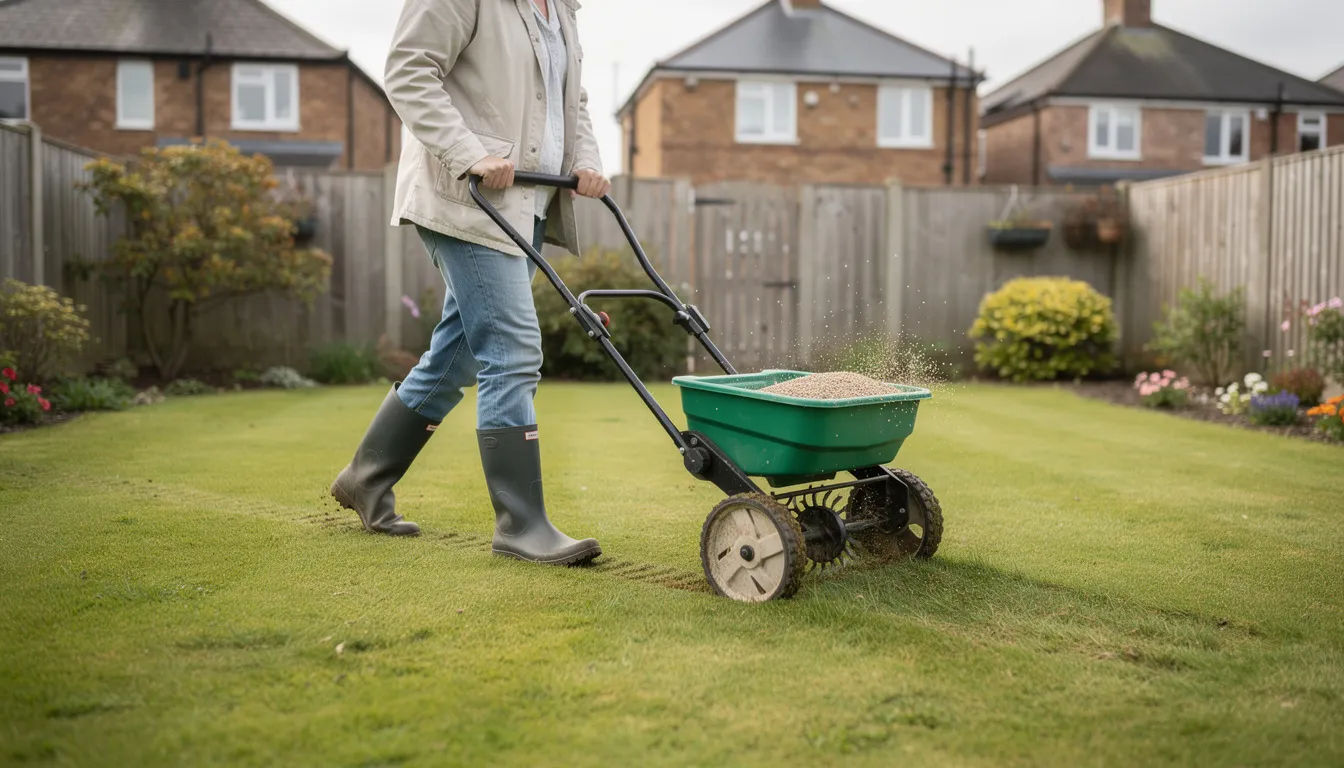
Even coverage is crucial. Options include:
|
Method |
Best for |
Tips |
|---|---|---|
|
Rotary spreader |
Medium to large lawns |
Walk at steady pace, overlap passes slightly |
|
Drop spreader |
Precise coverage, avoiding beds |
Slower but more accurate |
|
Hand application |
Small townhouse gardens under 30m² |
Divide product into portions for each section; broadcast in two directions |
|
Whichever method you choose, avoid stripes and clumps by working methodically. Apply half the product walking in one direction, then the other half at right angles for more uniform distribution. |
|
|
Step 4: Water correctly
After application, water the lawn if no rain is forecast within 24–48 hours. Your aim is moist but not waterlogged soil. For the next 2–3 weeks while seed germinates, keep the top 1–2cm of soil consistently damp. In typical UK spring or autumn weather, natural rainfall often handles much of this – but during dry spells, water lightly each morning.
Step 5: Wait before mowing
New grass needs time to establish before you cut it. Wait until seedlings reach around 5–7cm tall (usually 3–4 weeks), then mow lightly with a sharp blade. Set your mower higher than usual to avoid pulling delicate seedlings out of the soil.
Step 6: Safety and practical tips
Keep children and pets off the lawn until granules have fully dissolved and the grass is dry – this typically takes 24–48 hours after watering or rain. Store unused product in a cool, dry shed away from animals. Most feed-with-seed products are safe for wildlife once watered in, but always check individual instructions for any specific waiting periods.
Caring for your lawn after application
Once you’ve applied your lawn feed with seed, the journey to a lush, green garden doesn’t stop there. Ongoing lawn care is essential to maintain strong root systems, encourage new grass growth, and keep your lawn looking vibrant throughout the growing season.
**Watering and Mowing:**After the initial application, continue to water your lawn regularly, especially during dry spells in spring and autumn. Consistent moisture helps nutrients from the fertiliser penetrate the soil, supporting healthy grass growth and the development of strong roots. As your new grass establishes, maintain a regular mowing schedule—cutting little and often is ideal. Adjust your mower to the recommended height for your grass type to avoid stressing young shoots and to keep your lawn looking neat.
**Monitoring for Moss and Weeds:**Keep a close eye on your lawn for any signs of moss or weeds, which can quickly take hold if left unchecked. Early detection allows you to act fast, protecting your lawn’s health and appearance. If you spot problem areas, use targeted lawn care products or seek advice from trusted gardening websites and customer reviews to determine the best solution.
**Using Tools for Even Coverage:**For ongoing feeding or overseeding, a lawn spreader is a valuable tool. It ensures even distribution of grass seed or fertiliser, helping you achieve consistent coverage and enhancing the effectiveness of your lawn care routine. This is especially important for larger gardens, where hand spreading can lead to patchy growth.
**Evaluating Effectiveness and Adjusting Routine:**In the weeks following application, watch for positive changes—your lawn should become greener and denser as new grass growth takes hold. If you’re not seeing the results you expect, review the instructions on your lawn feed or fertiliser, and consider feedback from other customers to enhance your approach. Sometimes, a small adjustment in watering, mowing, or product choice can make all the difference.
**Choosing and Storing Products Safely:**Select lawn feed and grass seed products that contain the right balance of nutrients—look for nitrogen, phosphorus, and potassium to support healthy growth. Check coverage rates, read customer reviews, and compare products to find the ideal match for your garden’s needs. Our GREENER lawn kit FAQ also covers product safety, pet and child considerations, and how to use each treatment correctly. Always store lawn care products in a cool, dry place, out of reach of children and pets, and follow all safety instructions to protect your household.
**Online Security and Peace of Mind:**When purchasing lawn care products online, make sure the website performs proper security verification to protect your data from malicious bots. Look for signs like “verification successful” or a secure padlock in your browser, and only buy from reputable sites with positive customer feedback.
By following these best practices, you’ll not only maintain a healthy, vibrant lawn but also protect your investment in lawn care. With the right tools, products, and a little patience, you can achieve a garden that’s the envy of your neighbourhood—green, thick, and full of life all year round. If you’d like a simpler way to stay on top of treatments, our guide to garden care subscriptions in the UK explains how seasonal kits can handle the planning for you. So why wait? Start enhancing your lawn care routine today and enjoy the rewards of a beautiful outdoor space for years to come.
Choosing the right lawn feed with seed for your lawn
Not all feed-with-seed products are the same, and choosing the right mix helps you avoid disappointment. Miracle-Gro and Gro-Sure are brands that offer grass seed options, giving you a range of choices for your lawn. Here’s how to determine what suits your garden.
When considering product types, note that Wickes offers a variety of lawn care products, including fast-acting feed and all-in-one turf treatments for quick and effective results.
If you are choosing fertilisers, A1 Lawn's pre-seed and pre-turf fertiliser is designed to accelerate the growth of newly sown grass areas, making it ideal for establishing a healthy lawn quickly.
Look for fast-acting feed or treatments if you want rapid improvement in lawn health and quick repair of bare patches.
Match grass type to your situation
|
Lawn type |
Best grass mix |
Why |
|---|---|---|
|
Family/dog lawn |
Ryegrass-dominant |
Hard-wearing, fast to establish, tolerates heavy foot traffic |
|
Front garden (ornamental) |
Fine fescue blend |
Softer texture, denser finish, lower maintenance once established |
|
Shaded areas |
Shade-tolerant mix |
Contains species like smooth-stalked meadow grass that perform under trees or near fences |
Understand NPK ratios
When reading the bag, look for balanced formulations around spring and early autumn. Very high-nitrogen feeds (designed for midsummer green-up) can scorch new seedlings. A ratio around 10-5-10 or similar provides enough nitrogen for colour without overwhelming young grass.
Check particle size and quality
Fine, even granules spread more uniformly and dissolve predictably. Professional-style formulations tend to give more consistent results than cheap alternatives with irregular particle sizes. Better products also use coated granules that release nutrients slowly over 8–12 weeks, reducing the risk of burning and providing sustained feeding as new grass establishes.
Consider your household
If you have young children, curious dogs or local wildlife visiting your garden, timing matters as much as product choice. Apply when you can keep the lawn clear for a day or two, and choose products designed for busy household routines. Weekend application followed by a couple of days’ light watering fits most family schedules.
How GREENER simplifies these choices
GREENER’s system is designed to remove the confusion from product selection. For tired, patchy lawns, the Transformation programme tackles underlying problems before introducing new seed. This is followed by Seasonal Care with three targeted products:
-
GROWTH – balanced feeding to maintain colour and vigour
-
POWER – weed and moss control, timed correctly so it doesn’t harm new grass
-
BOOST – recovery and thickening through overseeding with optimised seed blends
This approach means you don’t need to become a turf scientist to achieve excellent results.
Seasonal lawn care: fitting lawn feed with seed into the GREENER system (full UK lawn care calendar)
Feed-with-seed works best as part of a year-round lawn care plan, not a once-in-a-decade rescue mission. This section maps optimal timing onto a UK seasonal calendar.
Spring (March–May)
Spring is ideal for using lawn feed with seed after a light scarify and aeration, especially following wet, mossy winters. Soil temperatures climb above the 8–10°C threshold needed for germination, and lengthening days encourage grass growth. This is often the best time to start a GREENER Transformation if your lawn has suffered over winter.
Apply feed-with-seed once you’ve cleared moss and thatch, and be prepared to water during any dry spells. New grass growth will be visible within 2–3 weeks, with full establishment by late spring.
Summer (June–August)
Heavy feeding and seeding together are usually avoided during hot, dry summer spells. Temperatures above 25°C stress grass and significantly reduce germination rates. Focus instead on lighter feeding to maintain colour, and water during dry periods.
Patch repairs are possible if summer conditions are mild and moist, but major overseeding is better saved for autumn. If you’re following the GREENER system, summer is a maintenance phase rather than a renovation window.
Autumn (late August–October)
This is the prime time for a major overseed with compatible feed. Cooler temperatures (10–18°C soil) and regular autumn rainfall create ideal conditions for seed germination without the watering demands of spring. Research shows autumn application can deliver 40% denser turf by the following spring.
GREENER’s GROWTH and BOOST phase fits perfectly here, feeding your existing lawn while thickening coverage before winter dormancy. Lawns treated in autumn typically show 30% less weed incursion the following season because the dense new grass crowds out competitors.
Winter (November–February)
Avoid using feed-with-seed during cold, frosty or waterlogged periods. Grass seed won’t germinate in cold soil, and fertiliser applied to dormant grass simply washes away or sits unused.
Instead, use winter for good housekeeping: maintain sensible mowing heights before the first frosts, clear fallen leaves regularly, and plan your GREENER schedule for the year ahead. A little forward planning now delivers a vibrant lawn come spring.
Adapt to UK weather
UK weather is famously unpredictable, so use these seasonal guidelines as a framework rather than fixed rules. Soil temperature, recent rainfall and local conditions matter more than calendar dates alone. A warm September may extend your autumn window, while a cold, wet April might delay spring applications.
Start your lawn transformation today
A healthy lawn isn’t about luck – it’s about using the right products at the right time, with clear guidance you can trust. GREENER’s Transformation and Seasonal Care system delivers exactly that, combining premium lawn feed, seed and expertise tailored specifically for UK gardens.
Ready to take the guesswork out of lawn care? Visit https://grassisalwaysgreener.co.uk/ to start your GREENER lawn transformation, or compare the true cost of a healthy lawn with subscription vs DIY care, and discover how straightforward achieving a thick, vibrant lawn can be.


